

What AI Shift Really Means for Leadership
In January 2024, Klarna quietly switched on a global AI assistant built using OpenAI’s tech. Within a month, it had responded to over 2.3 million chats—two-thirds of all customer queries that 700 agents would normally manage. It matched human agents for customer satisfaction and more accurate responses resulted in a 25% drop in repeat inquiries. Issues across more than 35 languages were resolved in two minutes flat, nine minutes quicker than before.
The headlines focused on scale and speed. What most missed? Klarna’s customer support had already been outsourced. So the AI didn’t displace internal roles—it replaced an external function. The gain was efficiency and a new market dead spot, not redundancy or redeployment.
But while some roles disappeared from the market, it didn’t reduce workload inside Klarna and despite AI, burnout isn’t going away.
Burnout is Rising—and AI Isn’t the Only Answer
According to AHRI’s latest Work Outlook Report, excessive workload is now the top reason people are leaving organisations, not pay, not poor leadership, not lack of flexibility—just too much, too often, with no relief or redesign.
The volume and velocity of work have surged. But many organisations are still relying on old structures, outdated workflows and leadership models built for a slower, simpler world.
It’s like watching a pressure cooker heat up—with no release valve in place.
Used well, AI can ease the pressure. So can better workflow design, clearer decision rights, or choosing not to keep spinning wheels on work that no longer delivers value.
But without leaders willing to adjust the heat—or even notice it’s rising—things start to boil over.

This is a Leadership Challenge
This isn’t a problem only about technology. It’s a leadership one.
And as Professor Marek Kowalkiewicz, QUT Chair in Digital Economy, puts it:
“Are you learning how to use AI? Or are you learning how to stay relevant in a world where some roles are no longer needed?”
- Staying relevant, he argues, means doing what AI can’t:· Understanding and framing context
- Bringing wisdom and ethical perspective to decisions
- Leading people through complexity, not around it
That’s not tomorrow’s skillset. It’s today’s missing piece.
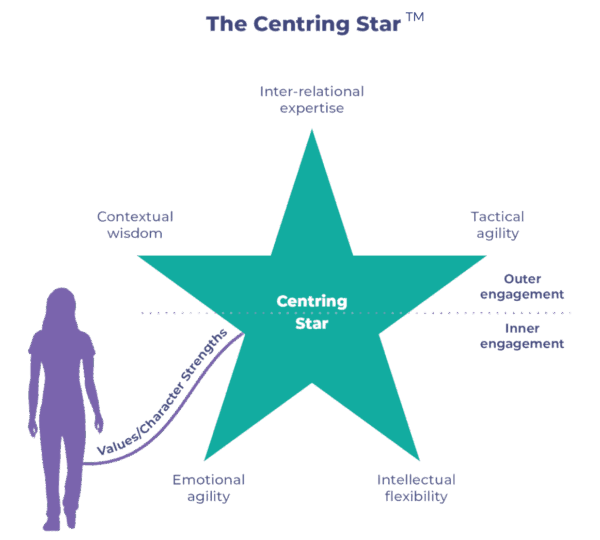
To lead well now, we need:
- Intellectual flexibility to rethink what no longer fits
- Contextual wisdom to know what matters most
- Emotional agility to respond without reactivity
- Relational expertise to navigate human dynamics
- Tactical agility to act with intention—even when the path is uncertain
If pressure is building in your team or organisation, ask:
- Where is work piling up—not because it’s hard, but because ownership is unclear or the structure hasn’t shifted to match demand?
- What decisions are stalling—not from lack of skill, but because people are overwhelmed?
- Which human strengths—like insight, empathy or ethical judgment—are being underused?
- Are we enabling people to respond wisely to what’s emerging—or just pushing them to cope faster?
If those questions open more than they close, let’s talk about how to build leadership that holds when everything shifts.