


When my daughter was in Grade 1, she started coming home from school upset.
Night after night, she would tell me, very firmly, that no one wanted to play with her.
I had not seen any signs that she was being excluded, but she was clear that no one would play with her.
Eventually I spoke to her teacher. Who was surprised. From her point of view, my daughter was not being left out at all. Quite the opposite. She was popular.
So, I went home and asked more questions.
What emerged was this: the other kids did want to play with her. They just did not always want to play exactly what she wanted to play, when she wanted to play it.
She interpreted that difference as rejection.
She had narrowed the situation in a way that made it harder to see the options she did have.
Leaders do this too.
Not with playground games, obviously. With stakeholders.
A funder agrees with the direction, but not the timing. A board supports the outcome but wants tighter controls. A partner is willing to collaborate, just not on your preferred terms. A team is with you on the goal, but not the sequencing of action.
The problem is not always that stakeholders are against you. Sometimes the problem is that they are not with you in the exact way you hoped.
That matters because leaders often respond to that gap by pushing harder, personalising the difference, or assuming the other party is the obstacle.
Sometimes they are. But what looks like blockage can be something else: a cautious response, working through constraints, issue with sequencing of actions, competing accountabilities, or a different read on priorities.
If you treat all of that as opposition, you miss the ground you could have built on and end up with slower decisions, less negotiating room, more friction, weaker influence, and avoidable stalemates because imperfect alignment turned into unnecessary conflict.
One useful idea here comes from social psychology: naive realism. It describes our tendency to assume that we are seeing a situation objectively, while people who see it differently are misinformed, irrational, or biased. That is one reason stakeholder disagreement can feel like resistance.
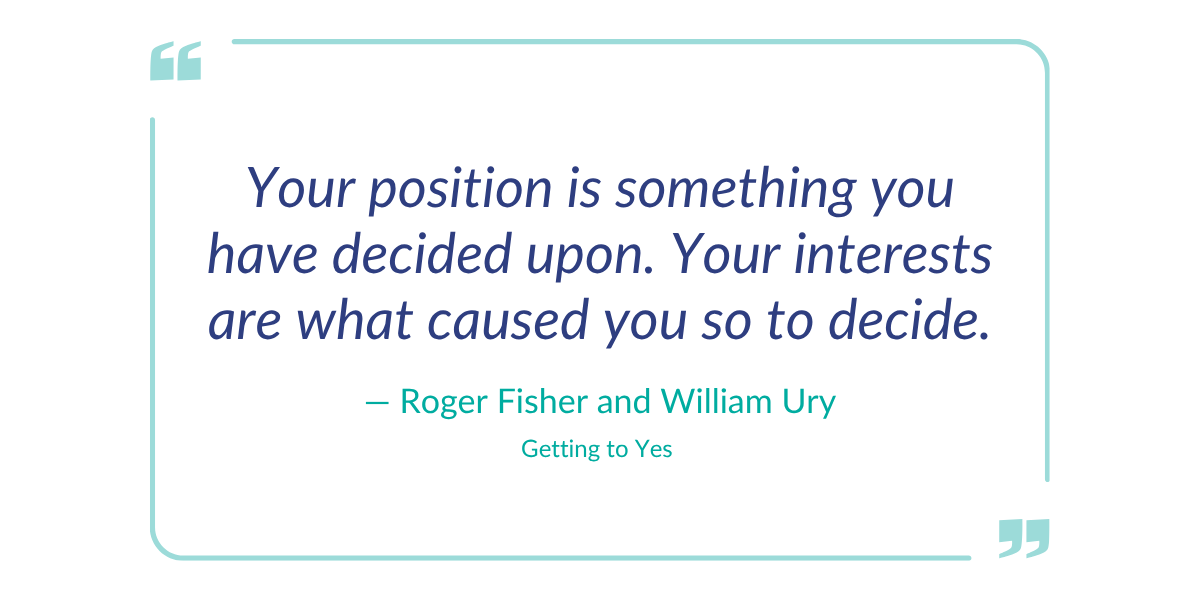
When a stakeholder says no to your proposal, they are not always saying no to the outcome. They may be protecting a different interest, managing a different risk, or working within a different set of constraints.
If you only react to the position, you can miss what is underneath it.
A simple way to think about this is as a traffic light problem.
Some stakeholder responses are red. They are a genuine no.
But a lot of responses are amber.
Amber sounds like:
yes, but not yet
yes, but not that way
yes, with conditions
yes, to the outcome, but not this route
Leaders get tripped up when they treat amber as red.
That is when they lose their influence.
If you can tell the difference between a red light and an amber one, you make better choices. You start by getting more curious about what would make a shift in position possible. You look for overlap instead of waiting for perfect alignment.
That does not mean settling for less or pretending disagreement is not real.
It means reading the situation properly before you decide what kind of response it requires.
Before you decide you’re blocked
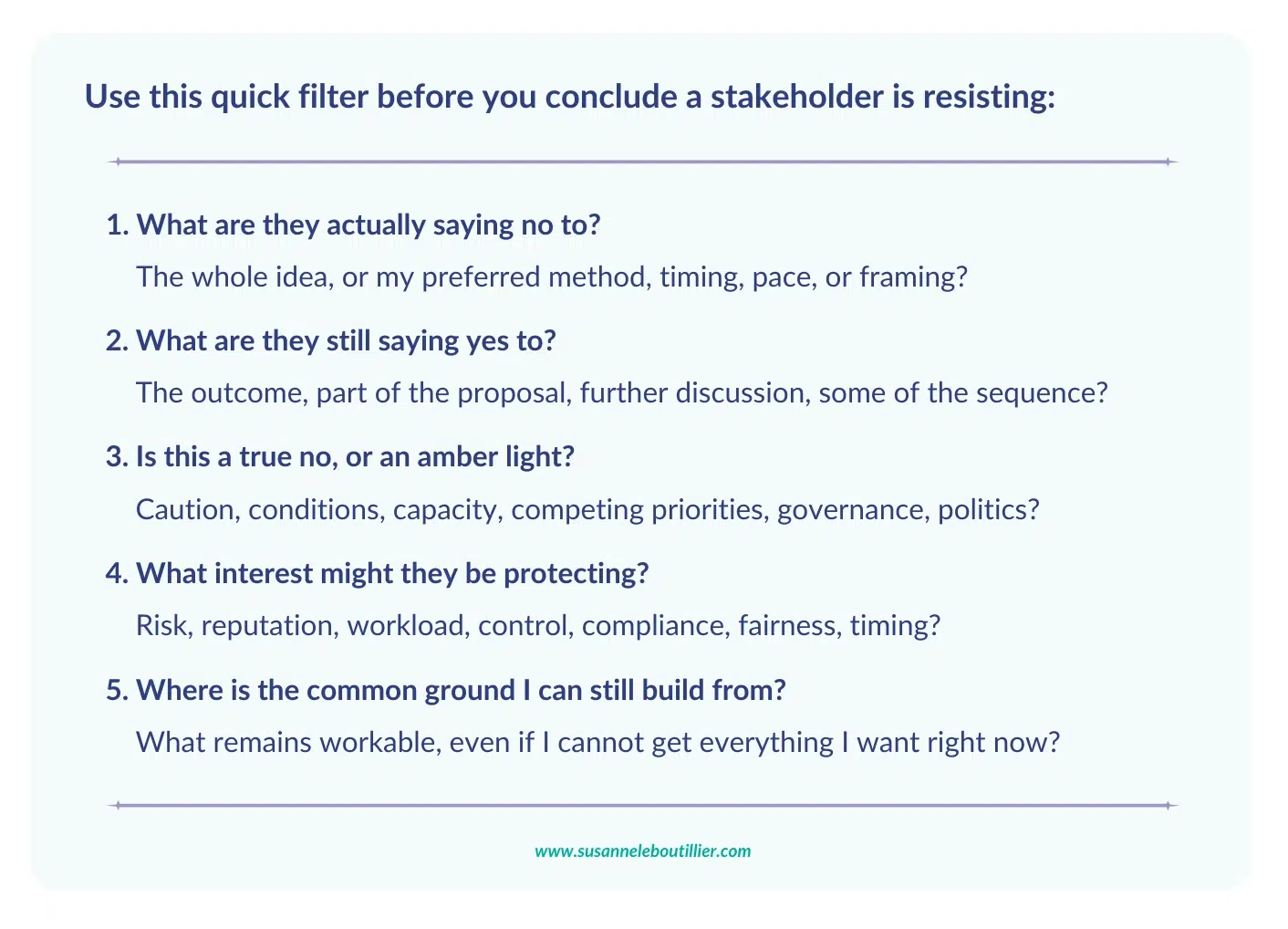
The leaders who move complex work forward are not the ones who demand full alignment early.
They are the ones who can spot the opportunities to find common ground, even when it arrives in an inconvenient form.
Three questions to consider
- Where in my current stakeholder work am I reading “not my preferred way” as “not possible”?
- What part of the resistance I feel, could instead be caution, conditions, or competing interests?
- What common ground is already available that I have been overlooking because I was aiming for full agreement?