

There was a time when the Royal Australasian College of Surgeons (RACS) and government health representatives were at an impasse—trust was thin, tensions high. When the Australian Competition and Consumer Commission (ACCC) required government representation on RACS decision-making Boards, I found myself on the Board of Surgical Training, right in the middle of that dynamic.
I had a choice. Follow the well-worn path of resistance taken by my interstate peers, or step back and ask: What approach will get us the best outcome? Not just for RACS or governments, but for the communities relying on well-trained surgeons.
Trust had to be built, and I knew it wouldn’t come from force or position—it had to be earned. So, I made some deliberate choices:
- Be transparent about where we were coming from.
- Be relentlessly curious—ensure we were all working from the same facts.
- Build real connections—understand what mattered to people.
- Follow through—do what I said I would do.
I took a different approach, and trust started to flow both ways. Surgical specialties engaged. Progress was made on previously immovable issues. And when the RACS President began calling me a “good bureaucrat,” I knew we’d turned a corner.
I share this because trust isn’t abstract—it directly impacts your ability to influence and create meaningful change.
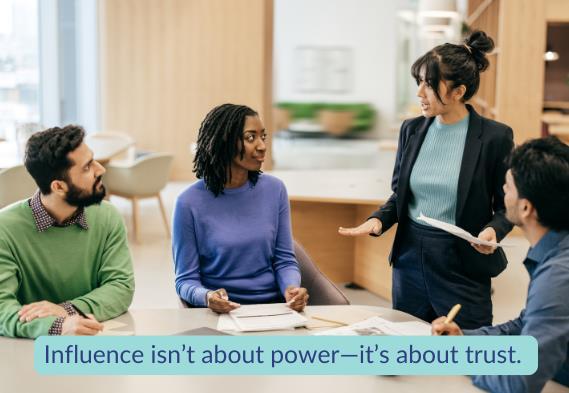
Influence isn’t about power—it’s about trust. Without trust, even the best ideas fall on deaf ears. With trust, you gain permission to lead.
Jack Zenger and Joseph Folkman’s research into over 80,000 leadership assessments identified three core elements of trust:
- Creating positive relationships
- Knowledge: Informed enough to make good judgements
- Consistency and whether you do what you say you will do.
Think of trust like a bridge—it takes time to build but can collapse in an instant if neglected. Every interaction, every promise kept (or broken), adds or removes a plank from that bridge.
Warren Buffett is credited with saying, “It takes 20 years to build a reputation and five minutes to ruin it. If you think about that, you’ll do things differently.”
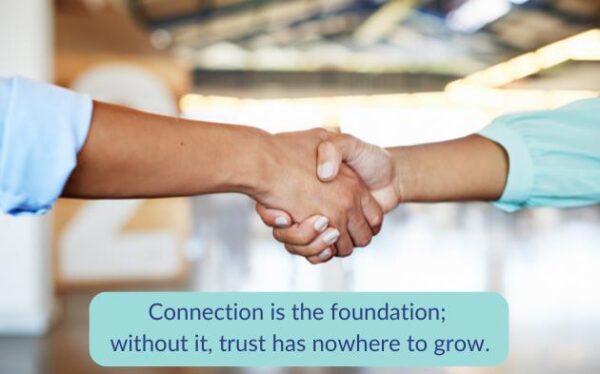
Zenger and Folkman’s research, however, reveals a deeper truth: relationships matter even more than consistency. Intentions often outpace actions, but when a relationship is fractured—or never built—trust struggles to take root. Connection is the foundation; without it, trust has nowhere to grow.
So, how do you grow and strengthen that bridge?
Connection: Build real relationships
Influence deepens when people feel truly seen, heard, and valued.
- Tune in to what matters to others—their challenges, priorities, and concerns.
- Foster collaboration, creating bridges where silos might form.
- Engage with conflict directly and constructively, turning tension into progress.
Consistency: Your word is your bond
Trust is built on reliability. People know they can count on you when your actions align with your words.
- Follow through on commitments—even small ones. If you say you’ll provide an update by Friday, do it—even if there’s no new information. Silence breeds distrust.
- Set realistic expectations and deliver on them.
- Go the extra mile, not for show, but because it matters.
Good judgment and expertise: Trust through knowledge
People trust leaders who are both informed and insightful. Depth of knowledge, paired with sound judgment, builds credibility and influence.
- Make decisions with clarity, weighing both data and context.
- Earn trust by offering well-reasoned perspectives.
- Be the voice others seek out in moments of complexity.
- Use expertise not just to contribute—but to drive meaningful results.
- Anticipate challenges and respond with agility.
If you want to increase your ability to influence external stakeholders, start here:
Ask, “What’s important to you?” Before pushing your agenda, understand what matters to the other person.
Follow through—no matter how small the commitment. Trust is built in small moments.
Address conflicts early, with curiosity. Avoiding conflict doesn’t resolve it—engaging with curiosity does. Approach disagreements with openness and a desire to understand.
Ask questions that uncover insights:
- “Can we clarify what we each know about this issue?”
- “What are the key concerns from your perspective?”
Lean into the conversation with stakeholders. Resolution starts with understanding. Building trust isn’t a “soft skill” – it’s a strategic advantage. When people trust you, they listen. When they listen, you can lead.