
What leaders protect first
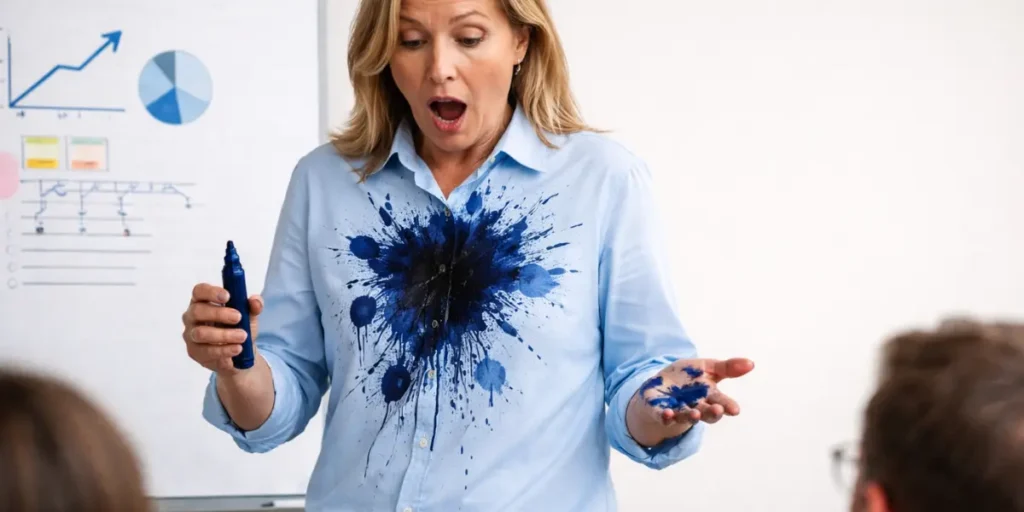
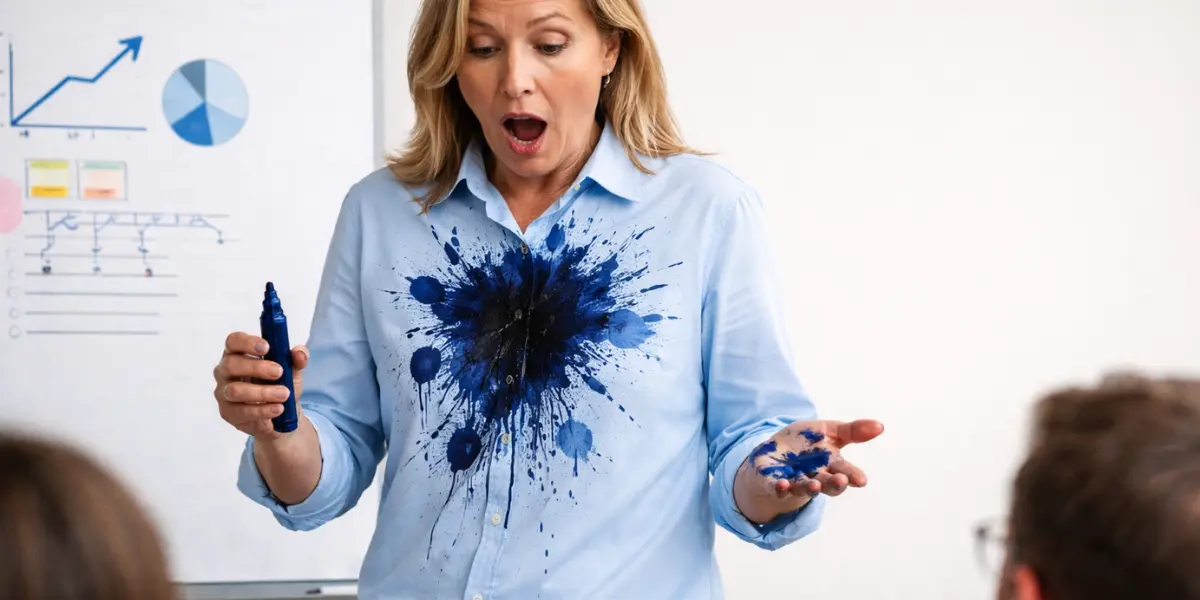
I was facilitating a board strategy day when one of my refillable markers exploded all over the front of my ice blue shirt. Not ideal.
There had been warning signs. A leak at home. Ink on my hands when I set up. A bit of joking about turning into a blue Smurf. I cleaned it up and kept going.
Then, during the session, I took the lid off again and dark blue ink exploded all over my front.
Everyone was kind. During the break someone handed me paper towel and dishwashing detergent so I could do emergency damage control in the bathroom. After that, I was standing there in a very good shirt that looked like it had lost a tie-dye fight.
But moments like that are useful. They show you what kind of attention the room is going to borrow from you.
The real risk was not the shirt. It was what the shirt could have done to the order of my attention.
That is the part I think leaders underestimate.
Disruption does not only interrupt. It reorders. Something awkward, badly timed or mildly exposing turns up, and before long you are managing embarrassment, noise or optics instead of protecting the quality of the work.
When people take their cue from you, that shift matters.
The board was not there for my shirt. My job was to help them do good work together, make sense of the issues in front of them and use the time well. So once the basic containment was done, the shirt moved down the list.
The work did not.
That, to me, is what being centred is for. Not to stop disruption. Not to help you look unruffled. To help you decide what matters now, what can wait, and how to keep the outcome on track when conditions change.
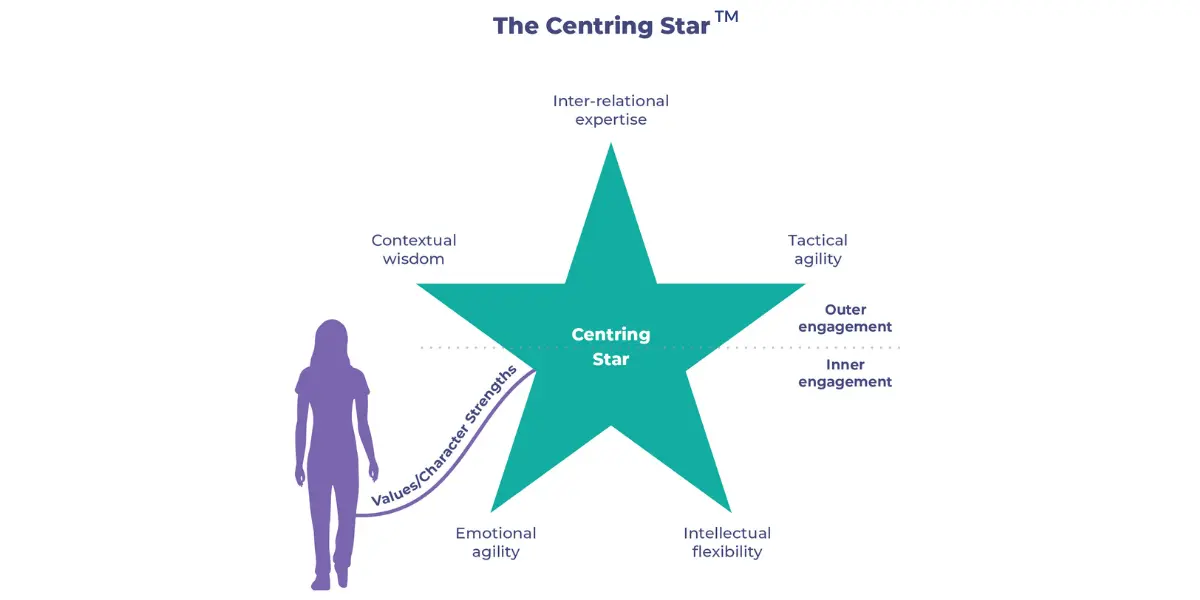
It is also one reason I wrote Centred. The book’s core idea is simple: you are not your context. When conditions change around you, you need a practical way to steady yourself, read what is happening, and take the next right step. That is what the Centring Star is for.
What pressure does to attention
Pressure narrows attention. It is a bit like driving in heavy rain. Your field of vision shortens. The obvious things come at you fast. You have to work harder to keep sight of the road ahead.
A meta-analysis found that acute stress impairs working memory and cognitive flexibility. It becomes harder to hold the wider picture in mind and easier to get pulled toward whatever is distracting.
That is how capable leaders end up responding to the wrong thing at exactly the wrong moment. Disruption does not just create inconvenience. It competes for attention, and attention is never neutral. Where it goes changes what happens next.
William James put it neatly:
“My experience is what I agree to attend to.”
— William James
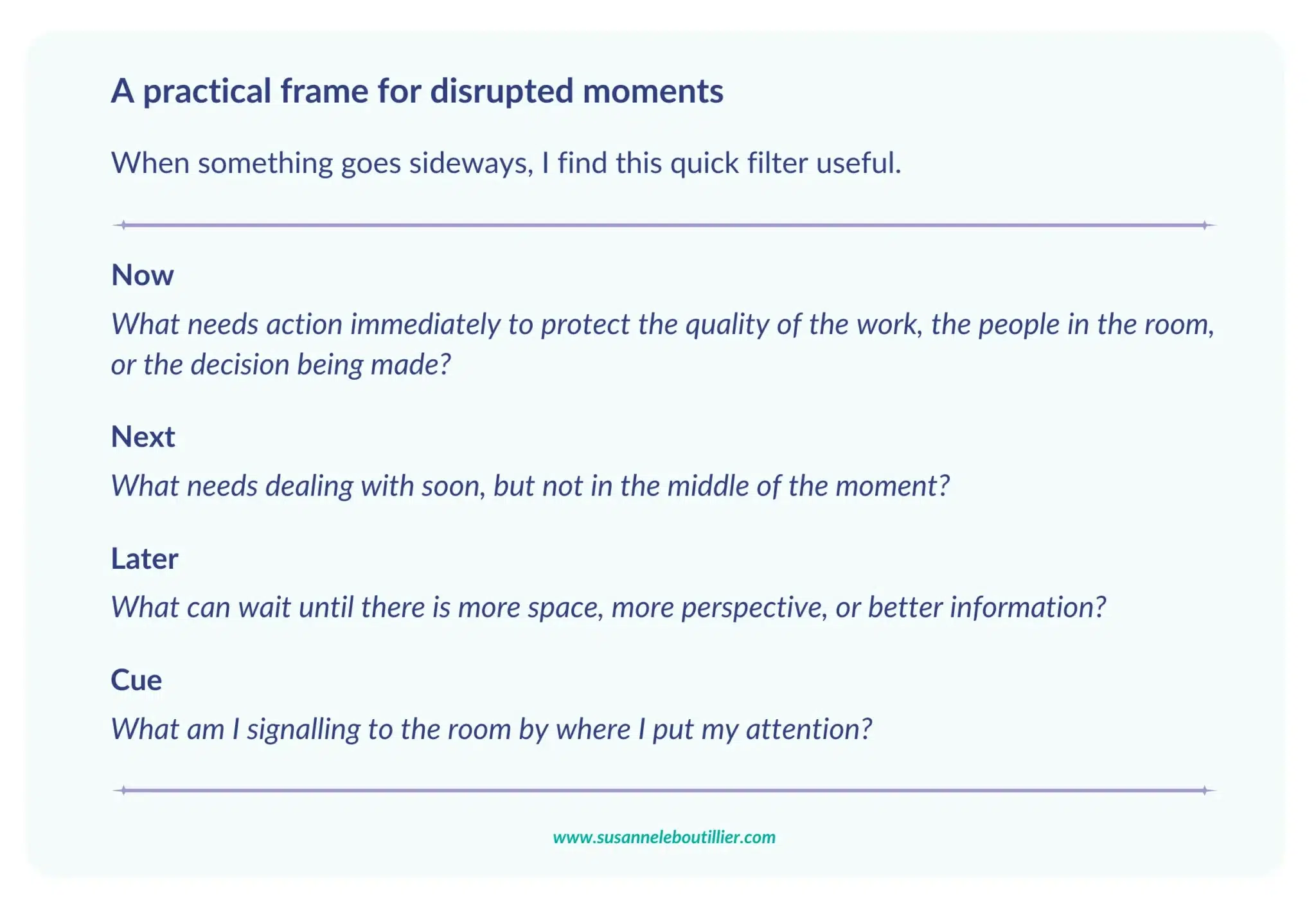
That day, the shirt could wait. The board could not.
In pressured rooms, disruption is rarely the real problem. The real problem is what it does to attention.
That is the work I do with leaders: helping them protect clarity, decision quality and forward motion when things go sideways.