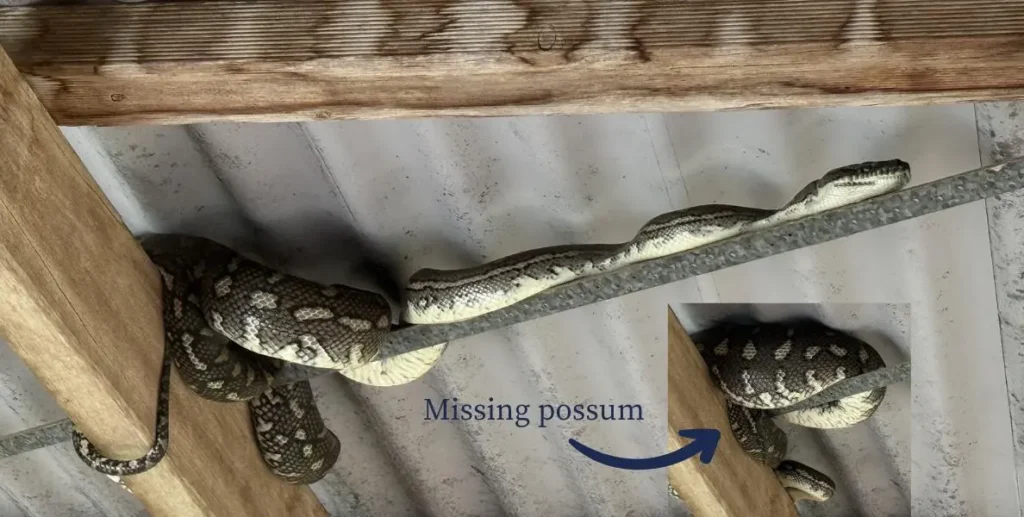
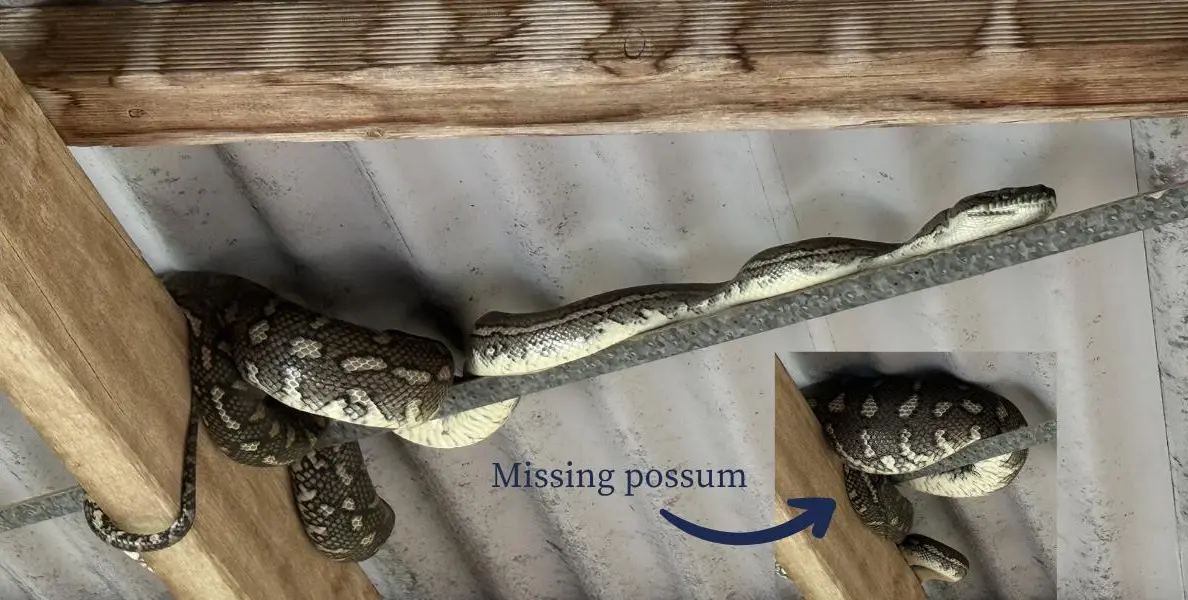
A large python turned up in the rafters outside our bedroom. It was close to winter, when snakes are supposed to be slowing down and out of sight. This one had other plans.
It lay draped along the rafter by the sliding door, digesting. You could see the lump partway down its body, about the size of a possum. It was in no hurry to move.
We did the obvious thing. The glass doors onto the deck stayed shut, dog flap and all. For about a week it stayed up there, barely shifting, while it worked through its meal. Then one morning it was gone.
Except I’m not sure it has gone. Every so often there’s a sound in the soffit outside our other bedroom window. A slow shift, then nothing. It might be the snake. It might be the house. I can’t see anything, and I couldn’t swear I heard anything. But my husband swears he’s heard it too.
That gap, between a risk you can see and one you can only sense but can’t confirm, is where a good deal of leadership attention goes astray.
Why is it so easy to act on the risk we can see?
It’s easy to act when a risk is right in front of you. The snake on the rafter got a closed door straight away, at least while we could see it.
It gets harder when the risk drops out of sight. It stops being in front of you, so it stops getting your attention, even though nothing has confirmed it has gone. The most challenging version is the one that only ever shows up as a faint signal you can’t yet verify. An early sign surfacing off to the side. A shift in a funder’s tone. A number that moved a little and might mean nothing.
For senior leaders across NGO health and human services, the pressures that will reshape the next few years don’t always announce themselves. Some will arrive as a whisper before they arrive as fact. The instinct is to wait until the signal is clear enough to be sure of. By the time it’s that clear, the space to respond is already starting to disappear.
Can confidence hide a blind spot?
A 2026 survey of 303 senior business leaders in the US, run by The Harris Poll for the risk firm Crisis24, found that every leader surveyed said they were confident in their ability to spot emerging risks ahead of competitors. Yet 93 per cent admitted their organisation had missed warning signs of a crisis or disruption, and nearly half said their leadership team is frequently caught off guard by shifts they didn’t see coming.
Sid Kosaraju, the company’s president, said that when nearly all of them also admit to missing warning signs, that:
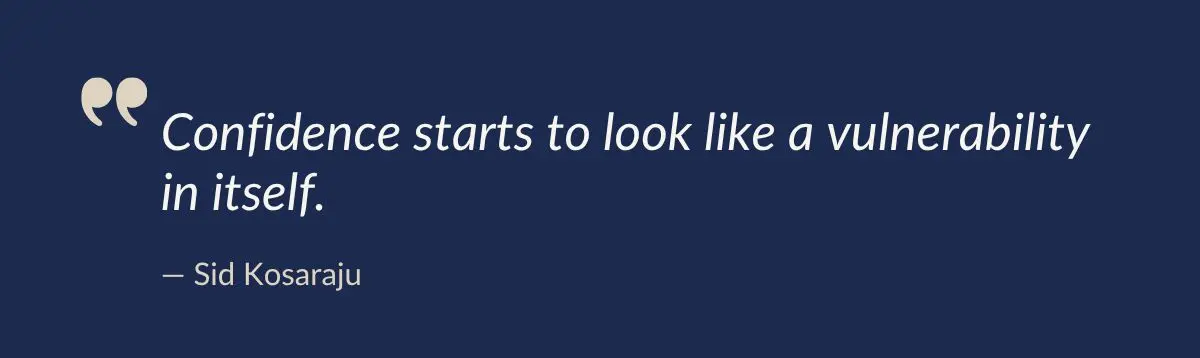
Often the issue isn’t whether leaders are watching. It’s that they watch for the risk they already recognise, in the place they last saw it. The faint signal from somewhere they’re not looking is the one that gets explained away.
Senior leaders in the same survey estimated that close to half, 46 per cent, of their leadership team’s time goes on reacting to immediate crises rather than preparing for
future ones. Giving a signal attention while it’s still faint is one of the few ways to change that balance.
How do you give a faint signal its due?
When a signal is too faint to confirm, the question to ask is what you’d want to know about it in a month, and whether you can start finding out now. You’re not acting on proof. You’re giving the unconfirmed signal enough attention to either fade or take shape.
Two other questions to ask.
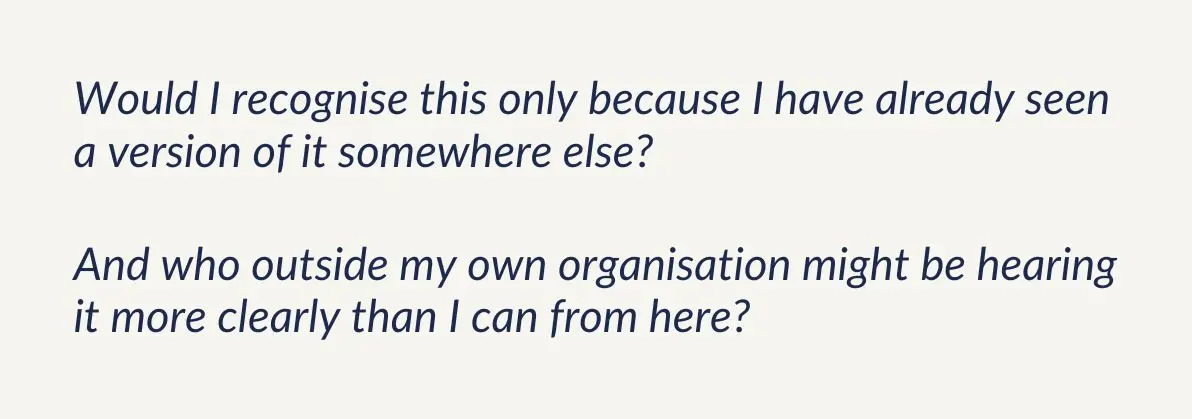
That second question is the one many leaders can’t answer from inside a single organisation. You can read your own patch closely and still miss the thing that’s already obvious from someone else’s seat.
Why is early the moment that counts?
The snake may be in the soffit. It may have curled up somewhere behind the shed. I won’t know until there’s something more to go on, so I keep half an ear on that wall while I get on with everything else.
With the snake, listening is the only move I have. In an organisation, you’re not that stuck. The reason to catch a signal early is that early is when your options are at their most open. Wait until it’s undeniable, and you’re responding with less time and less to work with, if the response is even still viable.
I see the same pattern in my work across health and human services. The early signal is rarely missing. It’s usually isolated, untested, or sitting with someone who doesn’t yet know what it means.
So when something is too faint to confirm, the move isn’t to watch it harder. It’s to take the smallest, most cost-effective action that either tells you more or buys you a bit of cover. A conversation with someone who would know. A question put to a peer in another organisation. A small marker you set down now, so you notice if the ground moves.
A regular check against peers facing the same pressure
That last move is one of the reasons I set up the Wider Lens. It’s where senior leaders across NGO health and human services test what they’re sensing against peers facing the same pressure from a different seat, before those signals become undeniable. It’s the conversation you can’t get from a panel, the one where the whisper you can only half make out from your own seat is something another leader has already started to piece together.
It runs under Chatham House rules every few months. The first session is in Brisbane on Thursday 16 July 2026, and I’m exploring a virtual option for leaders outside Brisbane.
If your organisation is hearing something it’s trying to make sense of, the Wider Lens is built for that conversation. Send me a message and I’ll send you the details, and let me know if a virtual session would suit you better.