
After a long day of meetings and an evening still at the desk, I switched on a streaming platform on the tier with ads. What I didn’t expect was for the 45-minute show to take 65 minutes to watch, because the same ad repeatedly played three times in a row, then once more after a single different ad slipped in between.
The ad was a political attack piece, running hard on an upcoming by-election. By the end of the show I wasn’t only irritated, I was irate. I was no longer paying attention to the cause they were fighting for. I only felt like fighting them.
Activity was confused with strategy and the purchaser paid for the privilege of doing the opposite of what they intended.
This is what happens at scale when organisations spend money on persuasion without thinking about the audience. When they mistake repetition for persuasion and treat audiences like targets rather than people.
For leaders, this is a trust problem. And trust is now one of the most expensive things an organisation can lose at scale.
When more spend buys less belief
The gap between intent and effect is one of the most expensive blind spots in organisational life. It shows up when culture programs land as a performance, or when communications meant to reassure end up corroding trust.
The pattern is consistent. Leaders or organisations decide what their audience needs to hear. They commission the message, fund the channel, and assume more output produces more belief.
At scale, a poorly received message does not simply fail. It compounds. It teaches people what to distrust and who not to believe next time.
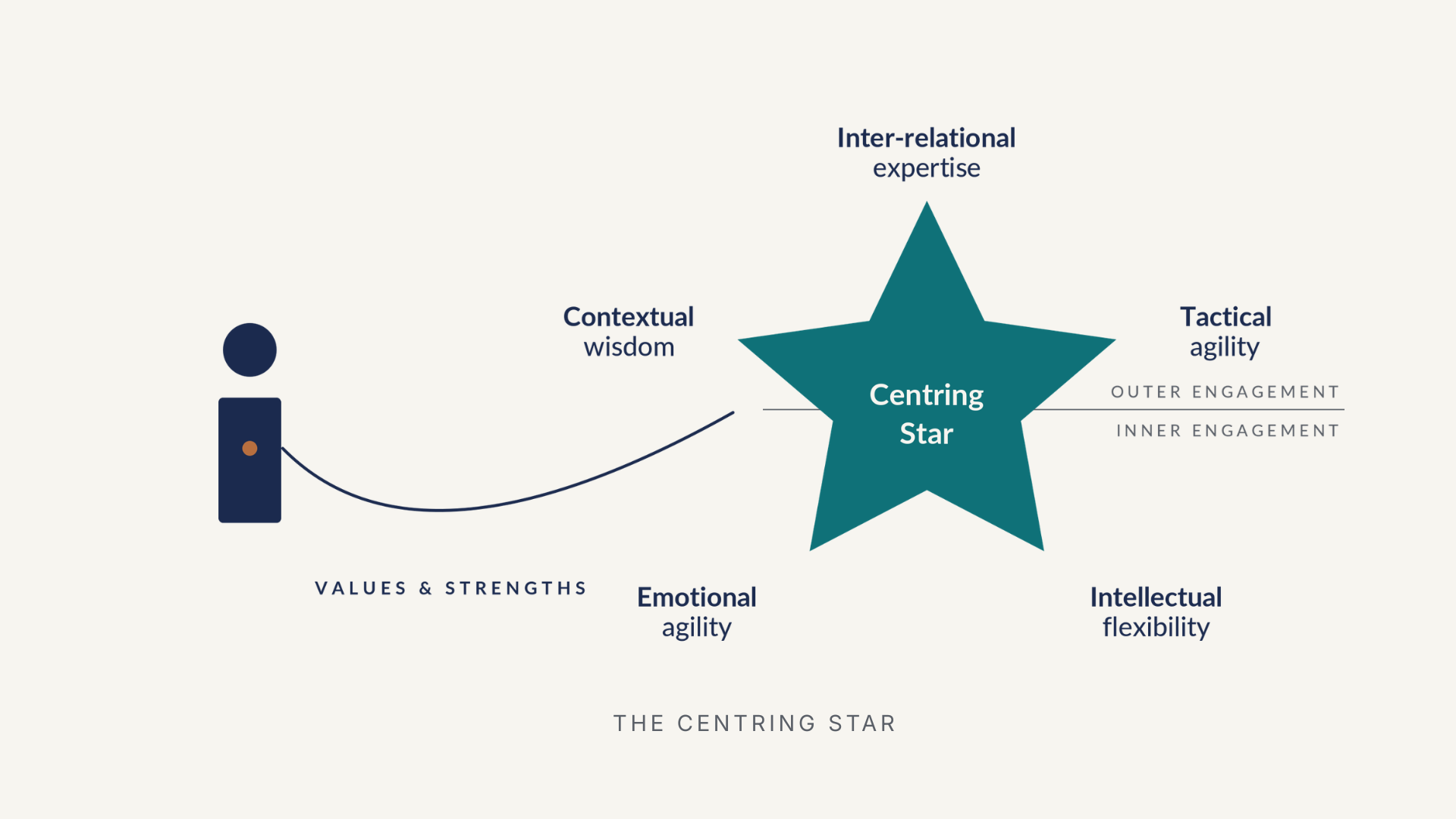
In the Centring Star, this is part of inter-relational expertise: the ability to understand how people will experience what an organisation intends to say.
Scale changes the maths. Damage compounds the same way trust does. When an organisation handles its audiences well, the upside multiplies across thousands. When an organisation gets it wrong, the damage travels with the same reach. The campaign’s ad ran in front of every viewer that night and took their standing with it.
Behavioural insight
Wharton professor Jonah Berger describes an internal mechanism inside all of us.
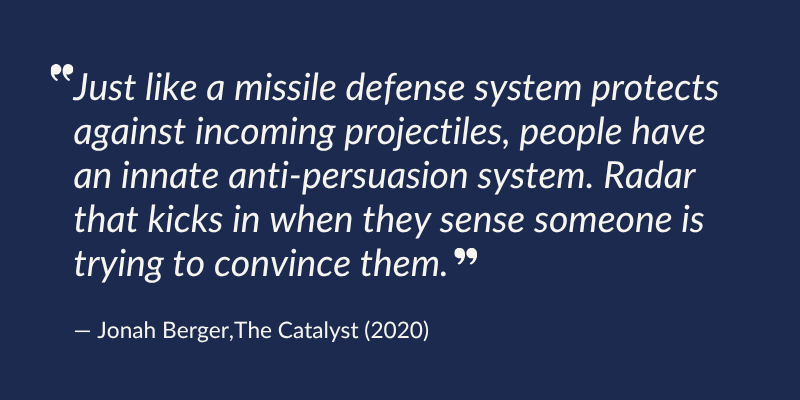
Just like a missile defense system protects against incoming projectiles, people have an innate anti-persuasion system. Radar that kicks in when they sense someone is trying to convince them.
– Jonah Berger, The Catalyst (2020)
It builds on Jack Brehm’s earlier theory of psychological reactance: when people feel pushed on, they push back. Researchers call the pattern the boomerang effect. The harder you push, the more likely your audience is to land somewhere you didn’t intend.
For leaders, this means resistance is not always a sign that people are difficult, cynical or change fatigued. Sometimes it is a sign that the message has been designed from the sender’s perspective, not the receiver’s experience.
Before the next campaign lands
Before any major communication or change effort lands, ask: have we tested how this will feel at scale, beyond how it reads in a slide deck?
A campaign that sounds reasonable in a boardroom can feel coercive at scale, and a message repeated for emphasis can become the thing it was meant to overcome. The test is whether the experience of receiving it, builds your standing or erodes it.
The campaign spent good money to teach me to dislike their cause. That’s an expensive lesson, and one being repeated in change programs, culture campaigns, and stakeholder comms across plenty of organisations.
Before your next campaign, change program or stakeholder push, ask the harder question: not “What are we saying?” but “What will this teach people to believe about us?”