A Familiar Road, Now Full of Surprises
Where I live, it’s been raining nearly every weekend for months. Not the soft, misty kind—the kind that soaks deep and rips bitumen to shreds.
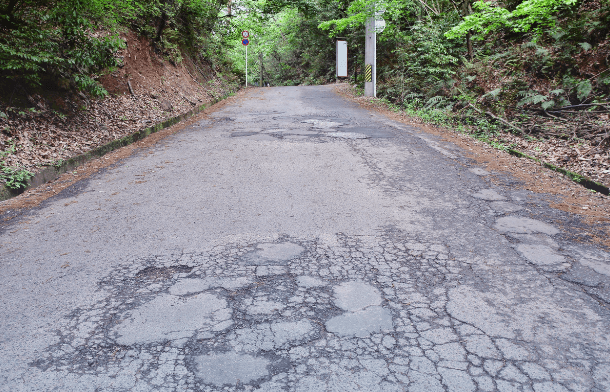
The road near home hasn’t coped. What was once a familiar, sealed track has become a pothole breeding ground. I’ve driven it thousands of times, usually on autopilot. But lately, it’s like the potholes have developed a group strategy. One gets filled by the council, and three more spring up in solidarity somewhere else. It’s less a road now—more a choose-your-own-adventure through a minefield.
They appear overnight. No warning. No pattern. Just one sharp, unexpected thud—and the damage is done. My suspension can confirm it. (RIP.)
These days, I can’t just coast along. I have to stay alert. Scan far ahead. Watch what’s directly in front. Adjust constantly. And even then, sometimes I hit one. And it jars—hard.
That road has reminded me: it’s not always the big, dramatic challenges that trip us up.
It’s Not Always the Big Things
Often, it’s the ones we thought we had covered. The meeting we didn’t expect to be tense. The conversation that shifted tone halfway through. We assume we can cruise—but context has changed. And when we don’t adjust how we’re thinking, the impact can be just as jarring.
So what’s really happening in moments like this—when something familiar suddenly demands our full attention?
Psychologist Daniel Kahneman, in his seminal book Thinking, Fast and Slow, describes two modes of thinking that govern how we operate:
- System 1 is fast, intuitive, automatic. It’s what we use to navigate the roads we know by heart.
- System 2 is slower, deliberate, effortful. It’s what we switch on when the road changes—when something doesn’t quite feel right and we need to make sense of it.

Most of the time, System 1 serves us well. It saves mental energy and allows us to function efficiently. But when the context shifts—whether it’s a pothole in the road or a subtle shift in team dynamics—System 1 can miss the cues. We keep coasting, unaware we’re no longer driving on solid ground.
The Power of Intellectual Flexibility
That’s where intellectual flexibility comes in.
Great leaders don’t just rely on instinct. They notice when instinct is no longer enough. They know how to shift gears—how to slow down, ask better questions, and reassess what’s really going on.
As Kahneman put it:
“We are blind to the obvious, and we are also blind to our blindness.”
Daniel Kahneman
And that blindness? It’s rarely about capability. It’s about attention. The ability to choose—consciously—when to stay in flow and when to pause.
You’ve likely driven that metaphorical road yourself.
A meeting that caught you off guard.
A conversation that veered unexpectedly.
A decision that felt familiar—until it wasn’t.
In those moments, it’s not usually a failure of judgment. Often, it’s a missed signal: the context has shifted, but our thinking hasn’t caught up.
That’s why intellectual flexibility matters.
Not just as a concept—but as a capability that directly affects performance. Leaders who can shift between fast and slow thinking make better calls under pressure, align people faster, and avoid the kind of rework that erodes trust and momentum.

If that sounds abstract, try this:
Before your next 1:1 or decision-making meeting, take 30 seconds to pause and ask:
What’s changed since last time? For me? For them? What assumptions am I walking in with?
That simple check-in can help you move from reaction to intention—before anything jars.
The Centring Star: A Guide Through Uncertainty
The Centring Star exists for moments like these. It’s not about staying still. It’s a way of reading what’s changed, tethering to what matters, and responding with awareness—even when the road keeps shifting.
So—where might that pause be missing for you right now?
And what might open up if you made just a little more space to notice before the next sharp jolt?
If you’d value a sounding board to work through that—someone who gets the complexity and helps you stay centred in it—I’m taking on a small number of 1:1 coaching clients.
Book a call here to see if it’s a fit.