


Why practice matters more than perfection
The moment I stepped onto the stage, the batteries in the clicker started to die.
Of course, they worked fine in soundcheck.
They worked fine for the two speakers before me.
But the second I needed them, there was nothing.
I clicked and clicked and clicked, and nothing happened.
And when it finally did work, it jumped three slides ahead, and I had to backtrack.
All while I was trying to deliver a keynote called No Map, No Problem! about navigating complexity when things don’t go to plan. The irony wasn’t lost on me.
Thankfully, I’d rehearsed until the content was in my bones. I could keep my focus on the audience instead of obsessing over the clicker.
People even came up afterwards and said, “Susanne, you showed us exactly what you teach i.e., staying centred in the storm, making the best choice you can in the moment.”
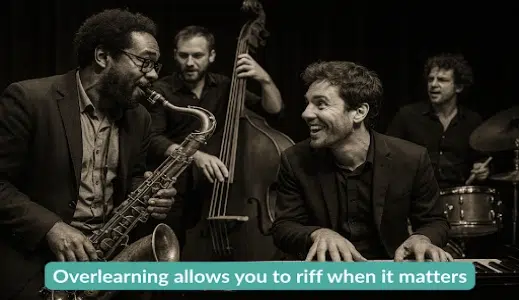
Overlearning allows you to riff when it matters
The brilliant Donna McGeorge took the stage after me, made a big song and dance of changing the batteries, and turned it into a running joke.
She reminded us all of something leaders often forget: storms don’t have to be weathered solo. Allies can lighten the load, reset the mood, and help us move forward together.
That’s the thing about preparation.
It’s not about creating certainty.
Things will break, both in rehearsal and in real time.
But rehearsal gives you the safety to practise your response so that, when it breaks in the moment that matters, you can adapt with confidence.
This is exactly what neuroscience tells us.
Experts in every field, from surgeons to jazz musicians, rely on “overlearning.”
By practising beyond initial competence, they strengthen neural pathways that allow them to adapt under pressure without losing core performance.
In fact, research published in Nature Neuroscience found that overlearning provides rapid and robust neurochemical protection for learned skills, making them resistant to disruption and easier to access under stress.
Dwight Eisenhower captured it perfectly:
“Plans are worthless, but planning is everything.”
— Dwight Eisenhower
He knew that no plan survives intact, but the act of planning equips you with the insight and flexibility to respond when circumstances shift.
Confidence isn’t built on certainty
It’s the same with leadership.
Think of a jazz band. They don’t cling to sheet music in performance. They practise scales until they’re second nature, and that’s what frees them to improvise without losing the rhythm or harmony.
Leaders are no different. The deeper the preparation, the freer the improvisation.
So ask yourself:
Where in your leadership are you assuming the clicker will work, when it might fail at the worst moment?
Which skills have you let sit at “good enough” instead of practising them until they hold under pressure?
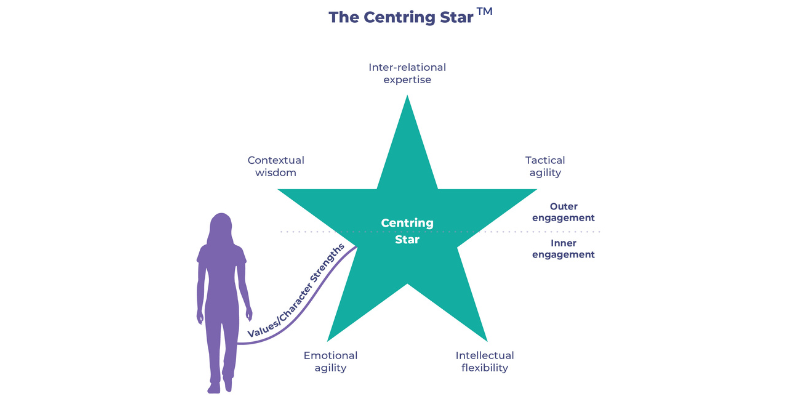
And when the batteries die mid-performance — literal or metaphorical — do you stay centred and adaptable, or do you let the storm play you instead of leading through it?
Because leadership isn’t proven when everything works. It’s proven when the batteries fail and you still make the room believe in the music.