
My husband is one of five boys. The whole family doesn’t gather the way it used to. Across the remaining brothers in Australia there are six cousins, ranging in age from 3 to 27. And up until late last year, all six had never been in the same room at the same time.
We managed to get them together for a family celebration. We offered to host. I thought I was organised.
My son was home on leave from the Navy. He and his father had been out the night before and, as you do, left my son’s truck at the train station and got an Uber home. Sensible. I wasn’t worried. I had everything set up. The only thing left was a trip to the butcher first thing in the morning. For a barbecue with a family of carnivores, that’s not a minor detail.
The plan was simple. My husband would run his errands. I’d drop my son at the station to pick up his truck, stop at the butcher on the way back, and be home well before anyone arrived.
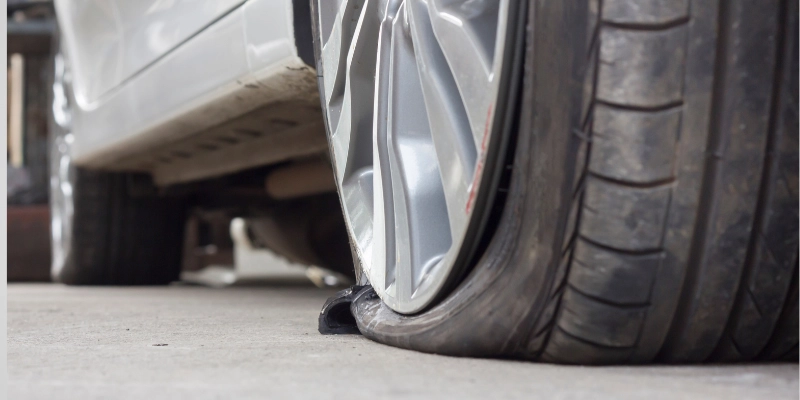
Then we walked out to the car and found a flat front tyre. Run-flats, so no spare. My husband had already left in his car. He wasn’t picking up his phone. And then my sister-in-law turned up extra early with my two little nephews.
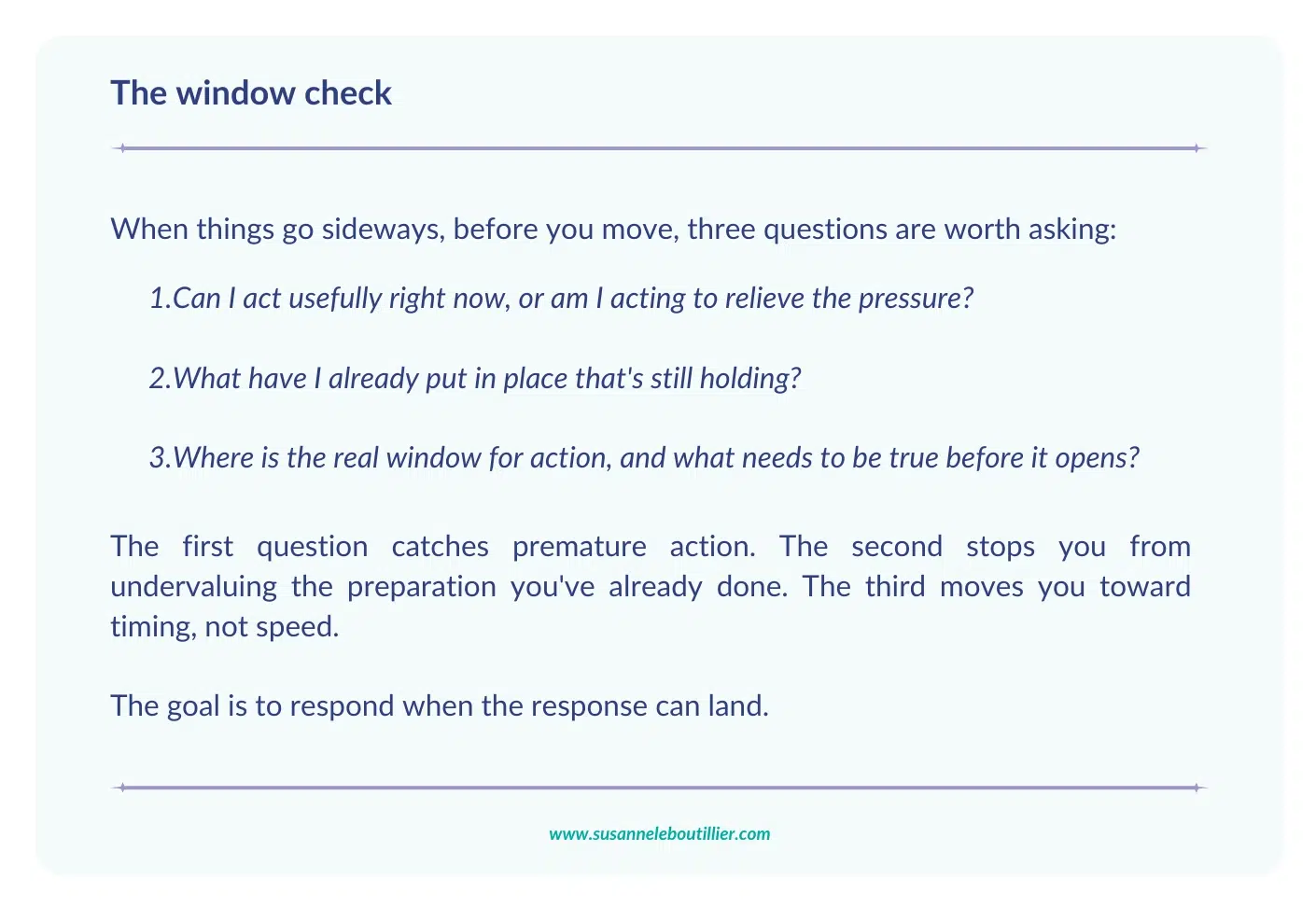
I took a breath. There was nothing I could do about the tyre. I couldn’t reach my husband. I couldn’t get to the butcher. So, I gave everyone drinks, put out some snacks, and waited.
Not because I’d given up. Because there was no useful action available to me yet.
My window came when my husband got home. He dropped my son and me to pick up the truck, went back to host the arriving family, and we went to the butcher. By the time we got back, everything was fine. Better than fine. It turned into a lovely day, and all six cousins were together for the first time.
When the pressure is to move, and the smart thing is to hold
I see a version of this with senior leaders all the time. Something breaks, shifts, or lands unexpectedly. The pressure builds to be seen responding to show the room, the board, the team, that you’re across it. That you’re doing something.
The fear underneath is that if you hold still, people will lose confidence in you.
So, the instinct is to act. Call a meeting. Commission a review. Restructure something. Launch a response. Even when the conditions for a good decision aren’t there yet, and when premature action is likely to create more trouble than progress.
Bar-Eli and colleagues analysed 286 elite-level soccer penalty kicks and found goalkeepers stayed in the centre just 6.3% of the time, even though in their dataset staying centred was associated with the highest chance of a save. Jumping left or right didn’t improve the odds. It did however, help the goalkeepers’ manage their discomfort.
That pattern shows up in leadership too. A restructure announced before the diagnosis is clear. A change in strategy driven by anxiety rather than evidence. A decision forced through because the silence felt unbearable, not because the timing was right.
The action feels productive but the cost shows up later: six months spent cleaning up a decision that didn’t need to be made yet. Good people who disengage. A board that loses confidence because the CEO moved too fast and got it wrong.
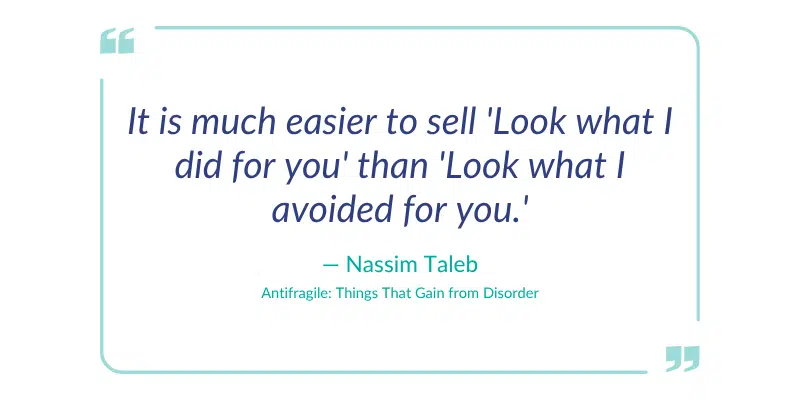
I see this most often where acting early feels decisive but creates months of avoidable rework.
The other side of the coin
But this is not a case for doing nothing. Leaders who wait too long have their own version of the problem. Analysis that never resolves into a decision. Consultation that keeps expanding. Caution that turns, gradually, into avoidance.
If you’ve ever driven a car with a manual gearbox, you’ll know the feeling of finding the bite point on the clutch. Too much accelerator and not enough clutch, you stall. Too much clutch and not enough accelerator, you roll backwards. The skill is in the balance, and it’s a feel thing. You learn it through practice, not theory.
The leadership equivalent is learning to distinguish between a pause that’s holding space for better action, and a pause that’s become its own form of inaction.
Back to the barbecue
The day worked. Not because nothing went wrong, but because enough of the groundwork was solid, and the things that broke didn’t require me to invent a solution on the spot. They required me to wait for the right moment, keep the room calm, and then move when I could move usefully.
Six cousins, all in one place, for the first time. That was worth the wait.
This is the kind of pattern I work on with boards and leadership teams. Not the flat tyre. The moment after it, when the pressure to move is high and the cost of moving too early is higher.