
Years ago, I asked a senior executive how she managed to stay so calm in the middle of a crisis. Her response stayed with me.
“I’m not calm,” she said. “I’m conflicted. But I’ve learned that rushing to be right doesn’t make things clearer—it makes them worse.”
Back then, I didn’t fully grasp what she meant. Weren’t leaders supposed to be certain? Decisive? Sure of themselves?
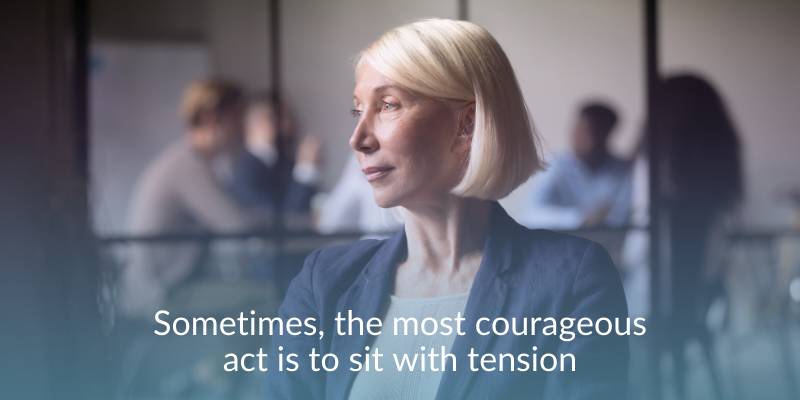
But over time—and through my own moments in the storm—I began to understand. Her quiet ambivalence wasn’t indecision. It was wisdom. She understood that quick fixes and confident declarations can do more harm than good in complexity. Sometimes, the most courageous act is to sit with tension rather than resolve it too quickly.
We live in a world that idolises clarity, certainty, and swift action. But when the landscape keeps shifting, decisions made in haste can unravel just as fast.
Ambivalence need not be a weakness. It can be a space where mature leadership lives—where complexity is respected, not overridden. That is if it’s a pause, not paralysis.
The upside?
- You stay open to multiple truths.
- You invite broader perspectives.
- You reduce the risk of premature closure.
- You align action with values—not pressure.
The risk if you avoid it?
- False certainty undermines trust.
- Your team feels silenced and sidelined.
- Black-and-white thinking fractures outcomes.
- Insight is lost in the race to decide.
Think of it like this: leading in complexity is like sailing through fog. You can grip the wheel and chart a bold course—but without visibility, you risk running aground. Ambivalence is like dropping anchor for long enough to scan your surroundings, orient yourself, and take the next right step—not the final one.
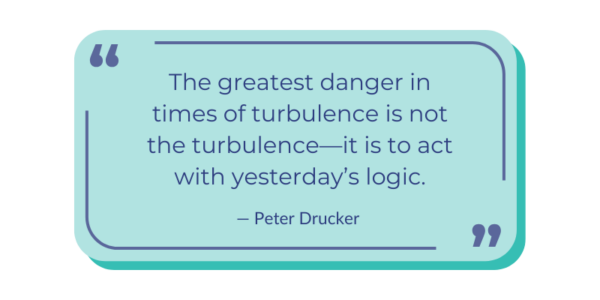
The best leaders resist the urge to jump to certainty. They reflect. They make space for tension. And they lead from the inside out.
Naomi Rothman’s article in The Wall Street Journal echoes what many of us already know: today’s most effective leaders aren’t simply decisive—they’re discerning. They hold multiple truths, ask better questions, and act from clarity, not pressure.
Harvard’s Francesca Gino and Gary Pisano found that leaders who reflect on their tension and success—rather than rushing to replicate it—make far better decisions over time.
That’s why leaders who embrace tension and stay open to nuance—rather than forcing certainty—are better equipped to lead in real life.

So, before your next big decision, pause. Ask:
- What am I assuming?
- What tensions am I holding?
- Who else needs to be heard?
- What matters most—not what feels most certain?
Because in today’s storms, clarity doesn’t come from confidence alone. It comes from centring yourself amid complexity, tuning into your values, and choosing the next right step.
Ambivalence isn’t the enemy of leadership.
Its leadership evolved.