
What happened
After completing a whole of organisation review, I was asked to check how the implementation was going. The client had introduced structural changes and used a well known job evaluation system to assess roles.
The head of HR could see a pattern. People were forming expectations about role levels and work streams that did not match the outcomes. There were misunderstandings sitting underneath the frustration because people had been trying to make sense of a system with insufficient but readily accessible information.
I was asked to design and deliver a short workshop. It was built as an intentional intervention. People were given the facts, the history and the logic behind the framework, but in a way that enabled them to engage, relate and drop the defensiveness. They worked through examples, asked questions and tested their assumptions with each other. As they did, the real points of confusion came into the open and could be addressed.
By the end, many people were rating their understanding four points on a ten-point scale higher than when they walked in. One person said what several were thinking. “This has been really helpful. It would have been good to know this before we went into the evaluation process.”
The session showed that intellectual flexibility does not appear simply because we want people to have it. If we want people to shift from unhelpful positions, we need to give them the right information and the right environment to stretch their thinking. They need relatable stories and access to the facts. When you design for that, people shift. When you do not, they spend your time filling the gaps themselves.
Facilitating understanding does not remove all the tension. It removes the tension that comes from trying to work in the dark.
The evidence behind this
Organisational psychologist Karl Weick said:
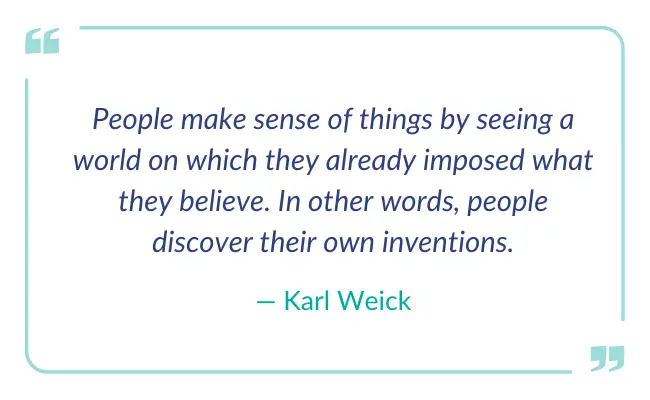
His research on sensemaking* shows that when people do not have enough information, they create explanations to keep going. These explanations feel logical but make good decisions and alignment harder.
Why this matters for leaders
If half a team of twenty people spends two hours a week talking through the same unresolved issue, that is twenty hours of lost focus each week. Over a year, that is more than one thousand hours where attention has slid away from core work.
People want to understand decisions that affect them. Without the right information, they guess. They compare. They create explanations that feel logical to them. This slows decisions and increases the load on leaders who end up filling the gaps one conversation at a time.
An intentional intervention costs less than the time already being lost. More importantly, it gives people the structure they need to think in more flexible ways. Intellectual flexibility improves when people understand the full context, not when they are left to figure it out themselves. Assumptions are replaced with insight and people move from confusion to understanding more quickly than waiting for the issue to settle on its own.

A useful frame
An iceberg is a useful frame. Most people focus on what sits above the waterline. They look at the visible activity, the surface signals and what feels immediately understandable.
But the real drivers sit below the surface. This is where context, logic, risk, expectations and constraints live. It is also where misunderstanding grows if people cannot see what is shaping the situation.
Intellectual flexibility depends on seeing both parts of the iceberg. When leaders make the submerged structure visible, the guesswork drops away. People adjust their thinking, interpret situations more accurately and reduce the friction that causes delays.
A practical tool
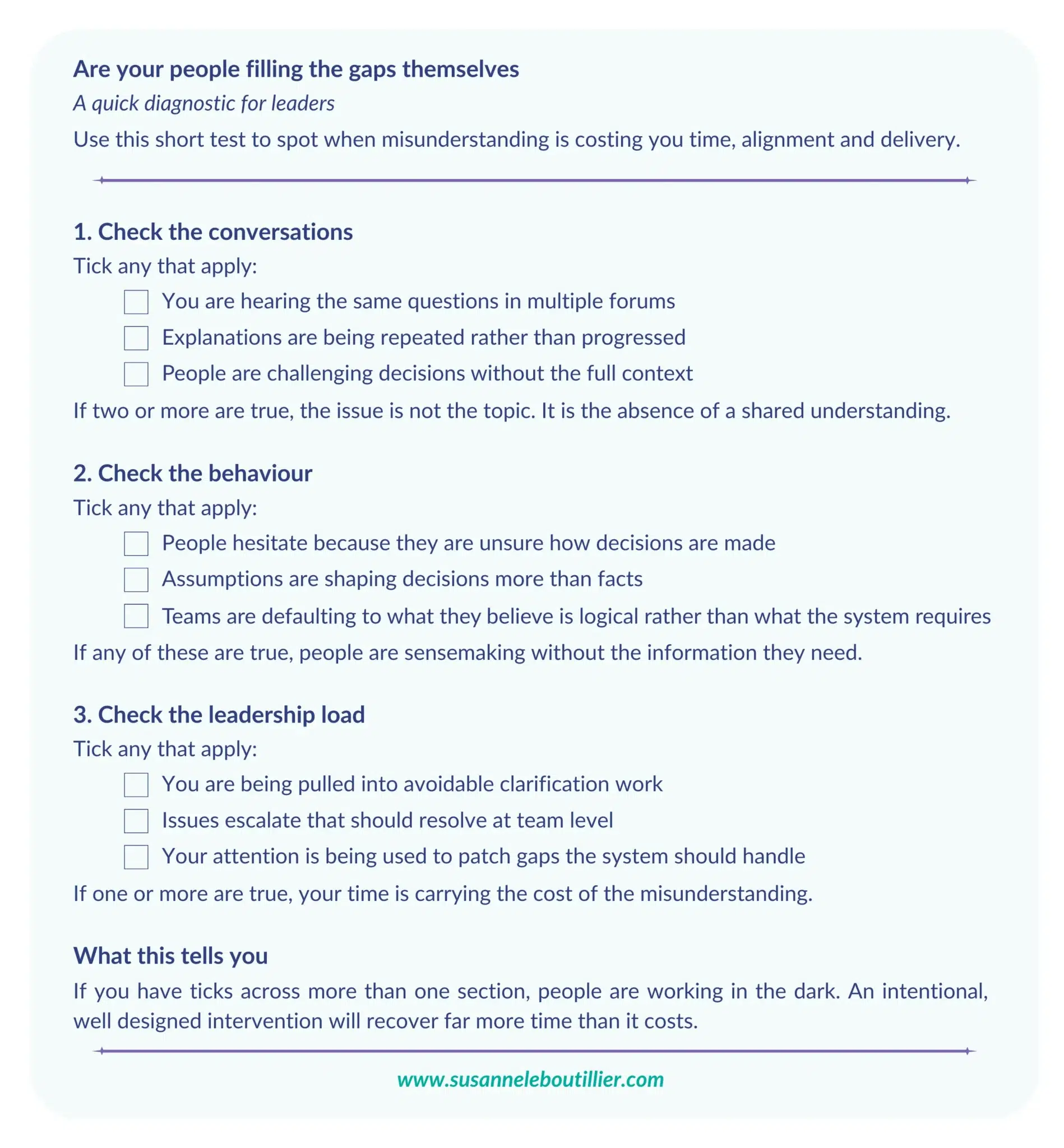
A small investment in shared understanding often unlocks more value than months of unresolved effort.
*Karl E. Weick, Sensemaking in Organizations (Thousand Oaks, CA: Sage, 1995).