
Commitment can mask capacity
In my work with leaders, both as an executive and now as an advisor, I see a familiar pattern in purpose driven leaders.
They set a direction that matters and often their teams respond. You can feel the lift when they all start leaning into something meaningful.
The challenge is that purpose and load do not always move together. In environments where policy and regulation shift, expectations change and scrutiny stays high, pressure can build quietly. People are committed. They stay positive. They keep saying yes.
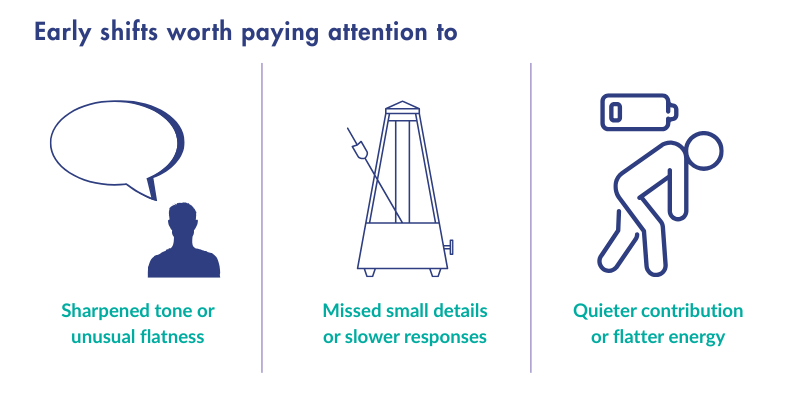
You only start to see the strain when one of those small moments gives you a window into what is really going on. These moments are subtle:
-
It might be the person who is usually steady sounding a little sharper than normal.
-
Or someone who is normally organised turning up a bit off their game and missing a detail they would never miss.
-
A confident voice going quieter over a few weeks.
-
Someone looking tired and brushing it off because keeping up has become the norm.
-
A constructive person slipping in a dry remark about yet another change.
-
A team member joining meetings with flatter energy than usual.
Why leaders need a pressure check map
Individually these moments do not signal a crisis. Together they tell you something is shifting underneath the enthusiasm.
This is where the Pressure Check Map is useful. It gives you a way to see where load is building and where your leadership may be adding to it without realising. It is not a diagnostic. It is a prompt. A moment to pause and consider how your expectations, pace or approach might be shaping the load your people are carrying.
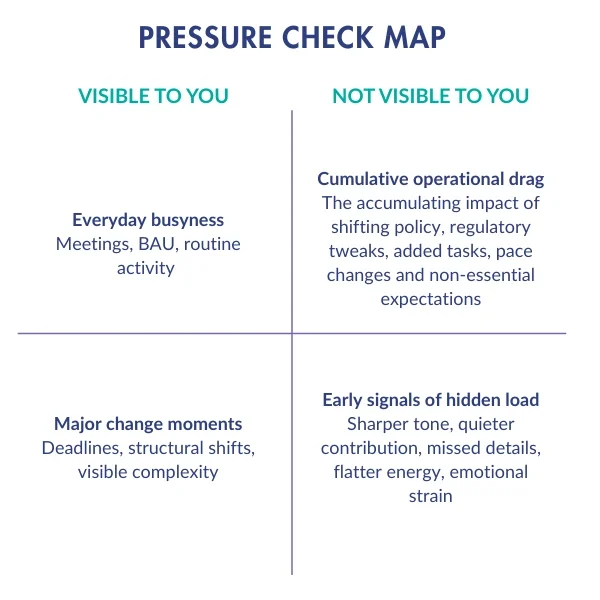
Senior executives often rely on visible indicators and KPIs to tell them how the work is landing. The problem is they don’t tell you how the people doing the work are coping.
Hidden load does not start with missed deadlines. It starts with these small behavioural shifts. Leaders who recognise them early protect pace, reduce unnecessary pressure and keep judgement steady when conditions keep changing.
People who are committed to the work keep delivering. They hold the standard even when their capacity is tightening.
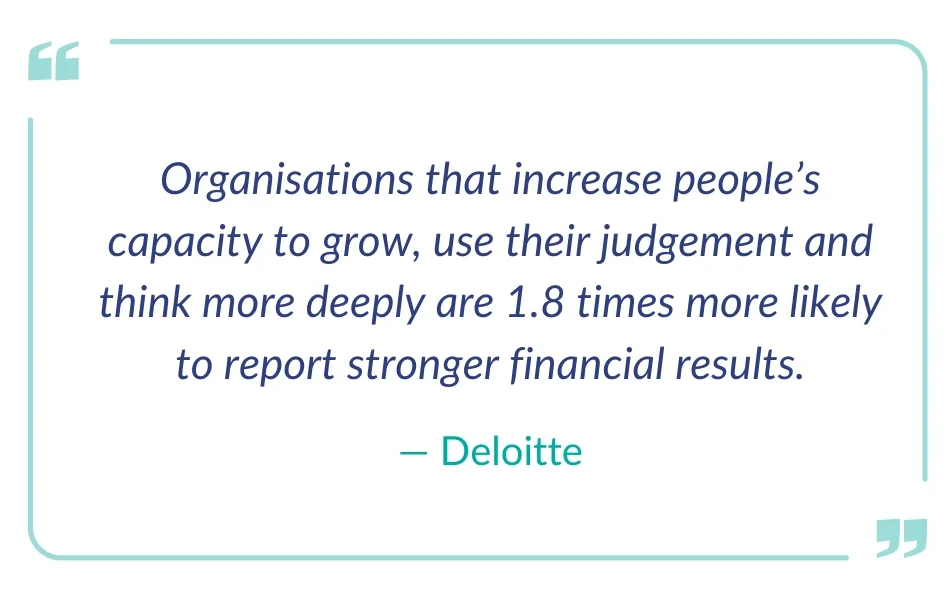
Deloitte’s 2025 Global Human Capital Trends report shows that commercial advantage increasingly comes from human advantage.
What subtle team signals can tell you
When leaders focus only on visible output and traditional performance metrics, they can miss the early signs that capacity is tightening. This leaves them exposed to slower decisions, weaker engagement and missed opportunities for sustainable innovation.
For senior leaders, those small off moments in your team can provide deep insight. They reveal a drop in capacity that has been slowly building in the background.
It’s like a slow leak in a tyre. The car keeps moving. The steering feels normal. Nothing looks wrong at first. As the pressure drops, you start to notice small changes. A slight pull on the wheel. A bit more effort to keep the car tracking straight. A bump in the road that feels sharper than usual.
The bump did not create the issue. It simply showed you the pressure that had already been dropping.
“Your job as a leader is to create clarity, generate energy, and deliver success.”
— Satya Nadella, Microsoft CEO
As Satya Nadella often notes in his interviews, outcomes rely on the energy and capacity of the people doing the work. When teams are exhausted, fatigue erodes clarity, drains energy and makes success much harder to sustain.
If you want to reduce hidden load, start here:
-
Where is pace slowing in ways that are not yet showing up in KPIs?
-
Where are the strongest people showing small signs of stretch?
-
How might your expectations, pace or communication be adding to the load, and what could lighten it without lowering standards?