

It’s one thing to lead through complex change. It’s another to step in after the damage is done—when trust is thin, the system is bruised, and people are still bracing for impact.
In a recent New York Times article, Adam Grant explored Elon Musk’s leadership legacy—a figure as brilliant as he is bruising. Musk’s story is full of tensions: visionary ambition tethered to contemptuous and erratic behaviour and genius with little regard for the social fabric around him.
Musk is the classic ends-justify-the-means type of leader we often see showcased in Hollywood blockbusters.
Think of the archetype made popular by Colonel Jessup in A Few Good Men: the hard-edged commander who defends brutal methods “for the good of the system.” Jessup doesn’t see himself as a villain; he sees himself as the only one willing to do what needs to be done. Like Musk, he confuses mission obsession with moral clarity—and leaves wreckage in his wake.
Some of you may have inherited systems shaped by a Musk-like leader — innovative, boundary-pushing, but ultimately damaging. The system might have achieved remarkable mid-term results under their leadership. Still, talent has fled, employee well-being has tanked, and people only speak up because it’s unsafe to stay quiet – the reverse of what the evidence tells us is required for high performance.
And now you’re the one steering the ship.
So what do you do when you’re not just leading in a storm — you’re leading after someone’s already set fire to the map?
You can’t lead well if you inherit a system still wired for dysfunction. Damage lives on in processes, unspoken norms, and exhausted people. If you don’t reset the system, it will reset you.

Not everything inherited is unworkable. Some elements may be worth preserving—if they’re recontextualised:
- Clear direction (often at scale)
- Big bets that create momentum
- High standards that lift performance
However, you’ll be hindered by:
- Trust deficits that run deep
- Reactive cultures shaped by fear or chaos
- Burnout, attrition, and learned helplessness.
Even when the storm has passed, the damage lingers.
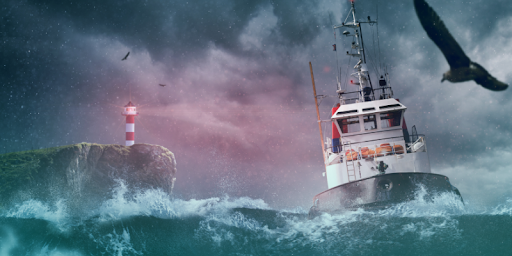
Picture a ship that’s just survived a brutal storm. The winds have calmed, but the sails are torn, the compass is unreliable, and the crew is shaken. You didn’t steer into the storm — but you’re responsible now for getting everyone safely to shore.
What To Do When You Inherit A Damaged System
What do you do? Adam Grant puts it well:
“Servant leaders aren’t shy about dishing out tough love. But they put their mission above their ego, and they care about people as much as performance.”
If your predecessor built performance by burning people out or silencing dissent, your role isn’t just to “carry on.” It’s to rebuild a culture where people are willing to try again.
According to Amy Edmondson’s research, psychological safety is the top predictor of team learning and innovation. Without it, people either play it safe or check out entirely.
A McKinsey Global Survey conducted during the pandemic confirmed creating a positive team climate through consultative and supportive leadership is crucial for fostering psychological safety. When this positive foundation is established, leaders can then effectively challenge their team to exceed expectations and achieve high performance. Without a supportive climate, challenging behaviours alone do not significantly enhance psychological safety or team performance.
If you’ve inherited a damaged system:
- Name the weather:
Acknowledge what’s happened. Pretending there wasn’t a storm only compounds the mistrust. People don’t need blame — they need clarity and honesty. - Reset the compass:
Re-establish values and expectations. Show — through your decisions, not just your words — that the rules of the game have changed. - Rebuild trust in small, consistent steps:
Don’t promise sweeping reform. Focus on micro-signals that show people it’s safe to speak, contribute, and challenge without fear.
When systems have been shaped by leaders like Musk or the fictional Colonel Jessup, the temptation is to either emulate their force—or overcorrect in the other direction. But leadership after the storm isn’t about being the hero. It’s about being the harbour—the place where people can recover, recalibrate, and rebuild. That’s where trust begins again.
Ready to lead after the storm? Contact us to find out how.