
I recently revisited the first season of 1923 before watching the next season.
One theme stood out—the human tendency to dehumanise those who seem different. Whether Native Americans, Chinese immigrants, or those from lower socioeconomic backgrounds, the show highlights how often people fail to truly see one another.
That reflection led me to current global events—atrocities committed against Jewish people, Palestinians, Ukrainians, and many others who suffer because of where they come from, what they believe, or how they identify. Layered onto this are the voices that amplify division—figures like Donald Trump and Andrew Tate, who promote narratives that undermine our shared humanity. However, that division is driven from the far right and the far left.
In Australia, the rise of anti-woke sentiment is often framed as a response to perceived overreach—where legitimate calls for justice are sometimes overshadowed by ideological rigidity, cancel culture, and identity politics. When activism shifts from fostering dialogue to enforcing purity tests, it risks alienating the very people whose support is critical for real progress.
The global 2025 Edelman Trust Barometer mirrors this shift. Richard Edelman’s latest insights are worth your time if you have two minutes.
One striking finding: 53% of people with a high sense of grievance agree with the statement, “What helps people who don’t share my politics comes at a cost to me,” compared to 23% of those with a lower sense of grievance.
This mindset—the belief that one group’s progress must come at another’s expense—is increasingly visible in workplaces and communities. It fosters an “us versus them” dynamic, eroding trust and stifling collaboration. Instead of seeing success as something that can be shared, many resist cooperation out of fear that someone else’s gain means their loss.
As someone trained in negotiation, I find this troubling. The assumption that “What furthers their interests comes at the cost of mine” reveals deep distrust—within workplaces, within societies, within leadership itself.
Leaders across business, government, and NGOs have a responsibility to challenge this zero-sum thinking. In complex environments, a scarcity mindset fuels resentment and makes meaningful progress harder to achieve.
A centred leader breaks through this trap by leaning into intellectual flexibility and inter-relational expertise—two key elements of the Centring Star Framework.
- Intellectual flexibility enables leaders to challenge rigid thinking, embrace multiple perspectives, and reframe challenges as opportunities for shared progress.
- Inter-relational expertise helps leaders engage constructively with diverse stakeholders, building common ground instead of division.
Here are three strategies to avoid falling into the zero-sum trap:
1. Reframe Success as Expansive, Not Finite
Instead of seeing success as a fixed pie, where one person’s gain means another’s loss, shift to a growth mindset. Ask:
- How can we create more opportunities for everyone?
- What’s a win-win solution in this situation?
2. Engage in Perspective-Taking and Getting
Actively challenge your assumptions by stepping into another’s shoes. Seek out perspectives from those who will be directly affected by your decisions.
3. Stay Tethered to Your Core Values
It’s easier to resist polarising narratives when anchored to your values. When you notice a zero-sum mindset creeping in, pause and ask:
- Am I acting out of fear or in alignment with my values?
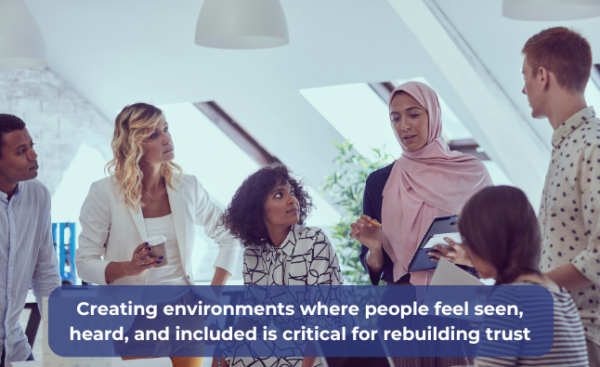
Creating environments where people feel seen, heard, and included is critical for rebuilding trust—especially in times of heightened grievance.
Instead of viewing success as a finite pie, think of it as a dining table that can always be extended. Leaders who make room for more seats foster cultures of collaboration, innovation, and shared achievement.
I encourage you to lead with more than clarity and confidence but also with humanity. The table is yours to expand.