
All through high school, I spent Monday afternoons at speech and drama classes at Mrs Davis’s house. It was more than public speaking. We learned elements of performance, and we did improvisation. You were handed a small slip of paper with an idea or a phrase on it. You had one minute to think about it, then a minute and a half to perform it. In that time you had to create something and commit to it completely.
I had no idea how often I would use that later. In industrial relations, and then in big change and transformation projects, I had to think on my feet far more often than any plan allowed for.
I’m not alone in this, as many leaders improvise more than they let on.
Tom Yorton, who spent 20 years in business before joining Chicago’s Second City comedy theatre to work with its corporate clients, said:
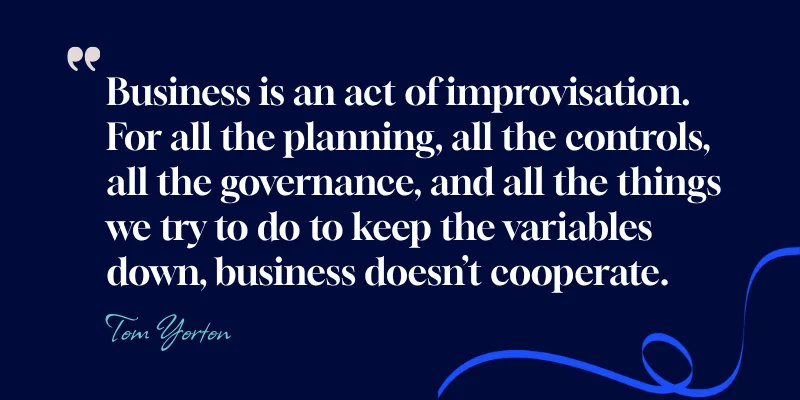
Change rarely follows the plan
A funding decision doesn’t play out as expected, a key person leaves, something shifts in the environment, and the plan you were following no longer fits. Many leaders respond well. They read what has shifted and adjust.
What their teams often see is a new plan arriving, without any of the other insights or thinking that led to the new plan.
At an improv workshop I was exposed to a one-word story game that offers another way to look at this. A group builds a story together, one word each, in turn. Nobody controls where it goes. It only works if each person is fully present and lets go of control, while keeping an eye on what the group is trying to create. At every turn you are tracking what came just before you, where the story is heading, what is happening right now, and what you need to add.
Everyone in the circle hears every word and tracks the story. When the story turns, they know why, because they heard it happen.
In an organisation, many people don’t hear every word. They see the plan change, and don’t understand why.
A leader can make the right call and still lose people’s confidence in it, because the people never understood why it was made.
A PwC Workforce Hopes and Fears Survey in 2024 found that “In Australia, 54% don’t understand why things need to change at all.”
Say the plan will change, then say why it did
Before a strategy day, I always have a pre-meeting with the client. I tell them that although we have a plan, if it isn’t getting us to where they need to be by the end of the day, I will change it on the run. That conversation means nobody is surprised when the plan changes.
Telling people up front is only half of it. When the plan does change, you still need to tell people why.
Try giving them the same four things the one-word story gives every player:
- What has just happened
- Where you are still heading
- What is happening now, and
- What you need from them next.
Leaders under pressure often skip the last one, and dropping it excludes people from being part of the change you want them to own.
On those Monday afternoons at high school, I had ninety seconds and nobody else adding words. Leading change, you have a whole team adding them. They can only add the right ones if they know where the story needs to head, why, and where it has turned.
If your 2027 plans involve significant change, your leaders will need to keep making sound calls while the ground keeps moving, and bring their people with them each time the plan changes. That is what my keynote, No Map, No Problem!, is about. Some organisations want their leaders thinking differently about change, and a keynote does that. Others want someone working alongside their executive team while the calls are being made, and that is where I facilitate. If you are planning a leadership event or a strategy session for 2027, reply and tell me what is changing for your people.
Written with AI assistance. The thinking and the final wording are mine.