A client of mine had a win recently. A good one. They helped shift a government position without losing the relationship they still need afterwards.
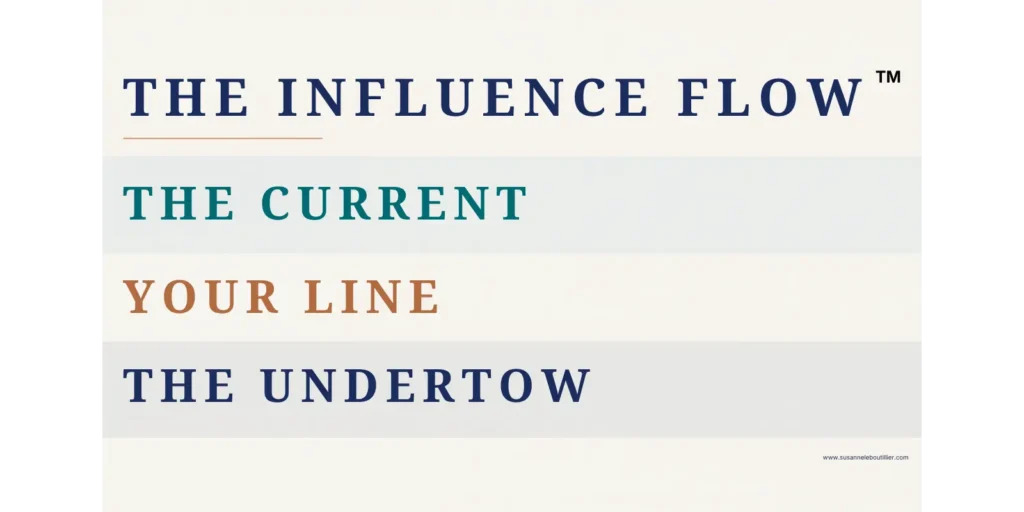
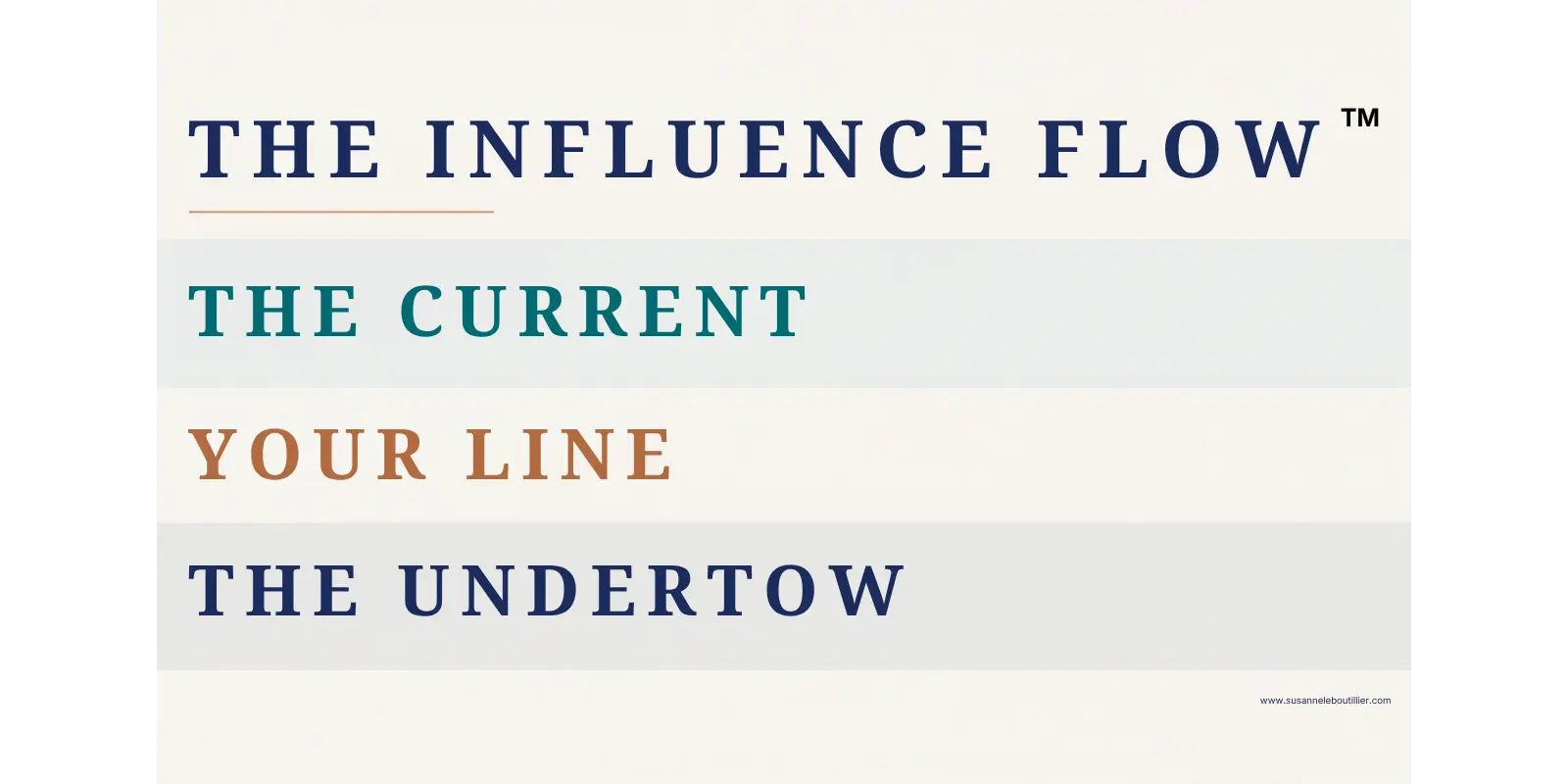
They know influence has three layers: the current you are in, the line you choose, and the undertow you have not named.
They lead a national network in the community services sector, working with Australians whose lives are directly shaped by government and institutional decision-making. These are people who depend on large systems to treat them fairly, and too often find they do not.
They were advocating on behalf of people affected by life-altering administrative decisions, where automation had begun to outpace accountability.
That was where they scored a win. Support came from people who almost never agree on anything. They lined up on the same side, and the remaining opposition no longer had the numbers to hold the position. Now my client will be included in shaping how the new approach will work in practice.
The part leaders can learn from is not only how the decision was shifted but how they kept the relationship they still need. The mistake is assuming the choice is binary: stay quiet and protect the relationship, or go loud and force the issue.
My client did something more strategic. They built the ground before the decision was made.
Working out who else could move it
They worked out who else had a reason to care, then approached each group differently. Peak bodies wanted the implications for the people and organisations they serve. Journalists wanted the public-interest story. Members of parliament, across the political divide, wanted to understand how this affected their constituents and accountability.
The evidence was consistent. So was their credibility. The route in was not, and they made it easy for each of the others to take up their cause. They continued to proactively manage the relationship with their funder, sharing the same credible evidence and a view of what good would look like.
Most leaders treat that as a contradiction. You work against the government’s position, or you protect your relationship with the government, not both. My client did both at once. In public, they were helping to shift the position. In private, they were holding the relationship.
By the time it came to a deciding vote, enough people who could influence the change were already pointing the same way. The change my client had been calling for is closer to being realised.
This runs against a lot of people’s views about grassroots advocacy. The instinct, when something is wrong, is to name it and shame it. To turn up the volume as loud as we can until someone has to respond.
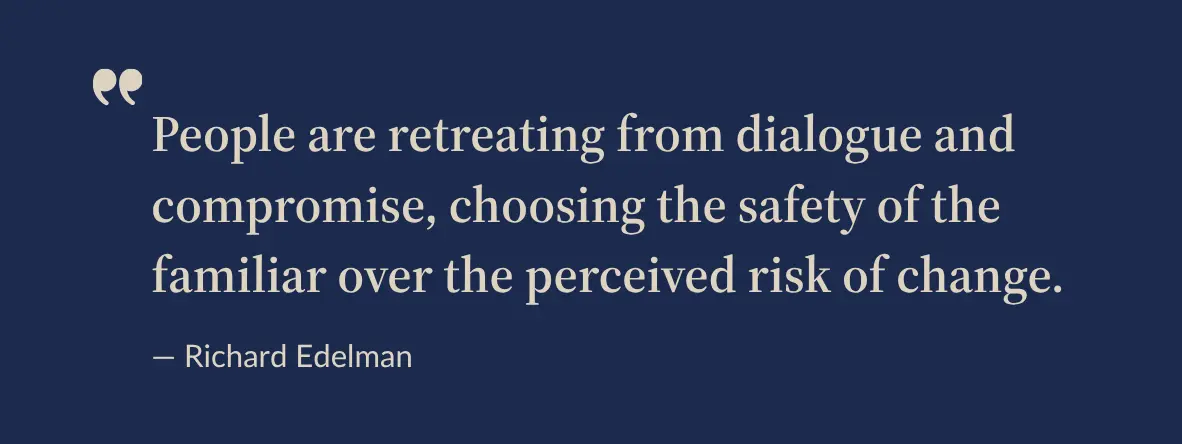
And the mood of the moment rewards that instinct. Edelman’s 2026 Trust Barometer, its twenty-sixth, found that seven in ten people are now unwilling or hesitant to trust anyone with different values, background or sources of information. People are pulling into the camps that already agree with them.
Richard Edelman, the firm’s chief executive, said:
When that is the temperature, it can feel like turning up the heat and getting louder yourself is the only way to go. But heat, without discernment and without managing the relationships around it, is unlikely to move you in the direction you want.
Public pressure can force a backdown, but it is less likely to earn you a genuine invitation to help build what comes next. This is because people who are publicly embarrassed remember it, and they choose their moment to pay it back.
The other route can be harder and slower but deliver a better outcome. You have to understand the people you want in your coalition, including the ones who support your cause without ever seeing themselves as part of your bloc. You look for where your interests line up with where they are coming from and facilitate trust building.
The current, your line, and the undertow
Many leaders miss that influence is more than the argument you make. It is the position you build before the argument is tested.
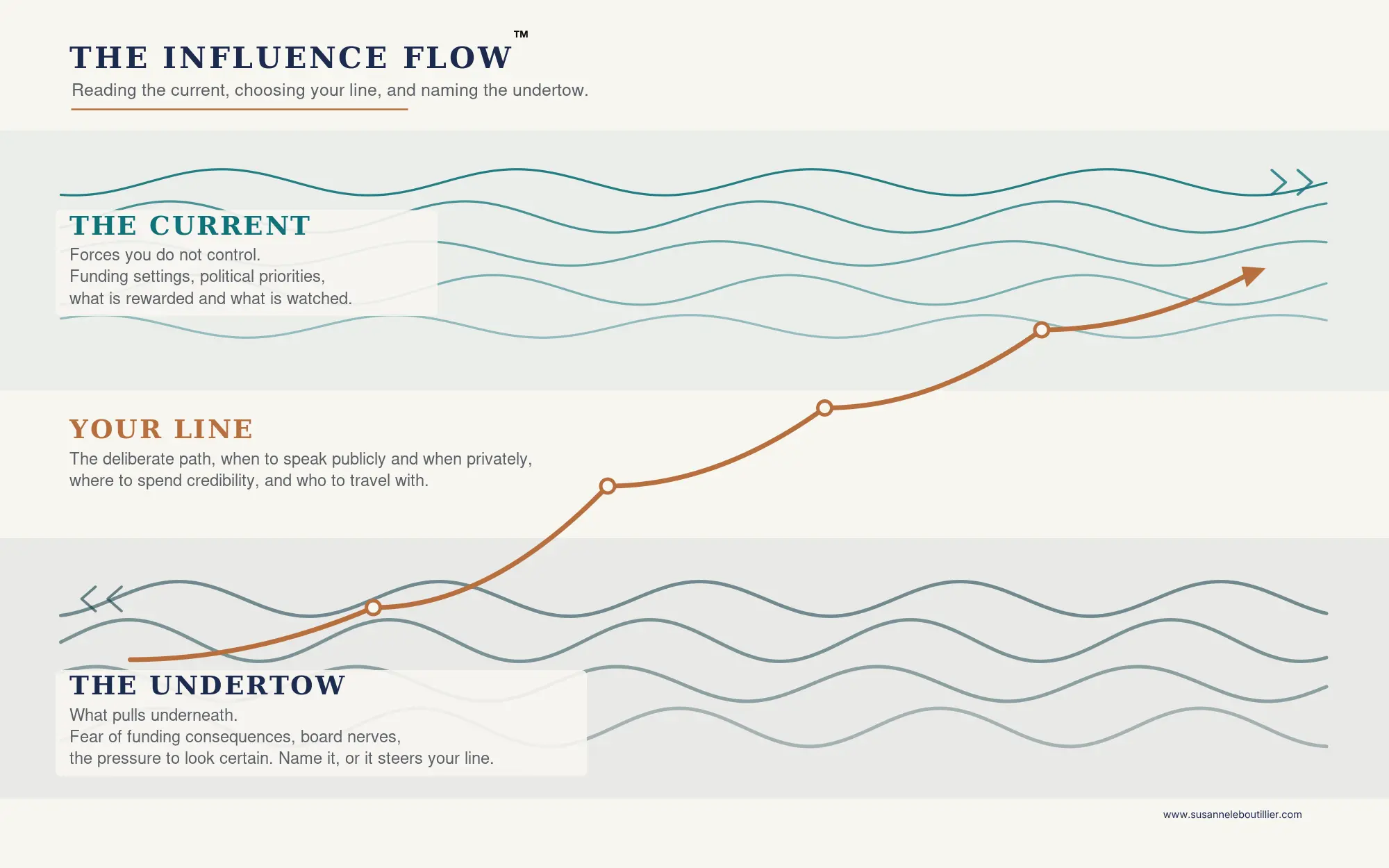
I think about that position in three layers: the current, your line and the undertow.
The current is the set of forces you are operating inside and do not control. Funding settings. Political priorities. What is being rewarded, and what is being watched. You cannot stop the current. You read it and choose how to move with it.
Your line is the deliberate path you take through it. When to speak publicly and when to speak privately. Where to spend your credibility. Who to travel with. My client’s line was the coalition, built one relationship at a time, so that when the moment came, they were not standing alone.
The undertow is what pulls underneath. The fear of funding consequences. The board nervousness about being seen to bite the hand that feeds you. The pressure to look confident while the ground is still moving. The undertow sits below the surface, and if you do not name it, it ends up steering your line for you. Organisations that stay silent on the very thing they need to say are usually being steered by an undertow no one has named out loud.
This is why advocacy strategy is a board question, not a communications one. Naming the red line not to be crossed, deciding what you will and will not say in public, agreeing where the risks sit. That is governance. It protects the line when the current shifts. It makes you harder to isolate, and harder to pick off. Trust, held with care, becomes a reserve you can draw on when you need it.
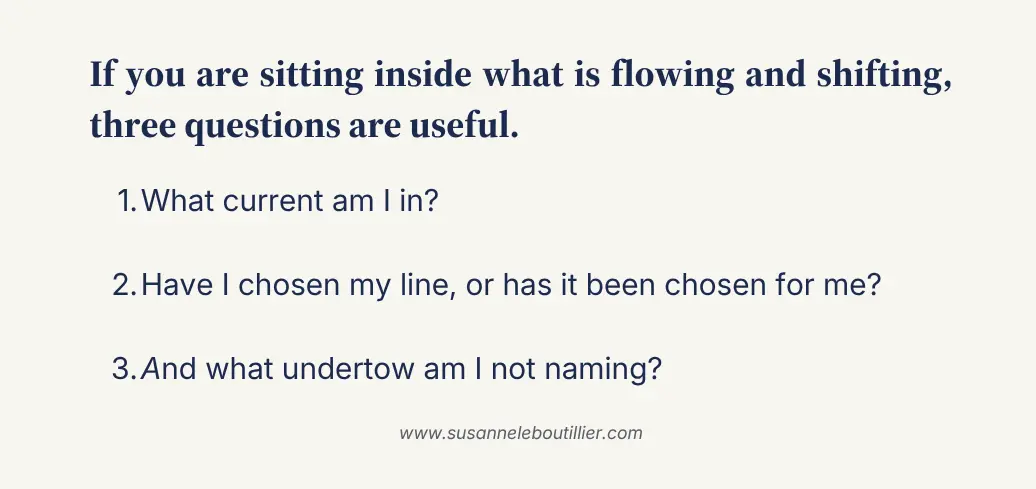
Most organisations do not lose influence for lack of evidence. They lose it because they have not chosen their line early enough and fail to identify and manage the undertow steering them.
Influence has moved from persuasion to positioning. The organisations that win are not always the loudest. They are the ones that prepare the ground for the decisions they seek.
This is exactly the work we do in Influence by Design. It is a six-month program for senior leaders in health and community services who need to position their organisation and shape funder, government and sector conversations their work depends on. We build the method for reading the current, choosing a deliberate line, and holding it as the pressure rises.
If your organisation is working through an advocacy challenge, a delicate funder conversation, or a board that knows it needs to speak but has not yet agreed how, reach out and I’ll provide you the details for the next Influence by Design program or an in-house version for your leadership team.