

A Decision I’m Not Rushing
Over the last few months of last year, I found myself driven to clean out and discard what we no longer need from cupboards and drawers.
I had been shoving things into them for years. I was either too busy to make a real decision, worried I might need them one day or avoiding making a longer-term decision about their future.
Our kids have both moved out now, and I kept coming across things that didn’t need to go in the bin, but they didn’t really fit us anymore. So, I’ve been letting a lot go.
What surprised me most was the feeling that came with all this shedding. I felt like I was making space for what’s next.
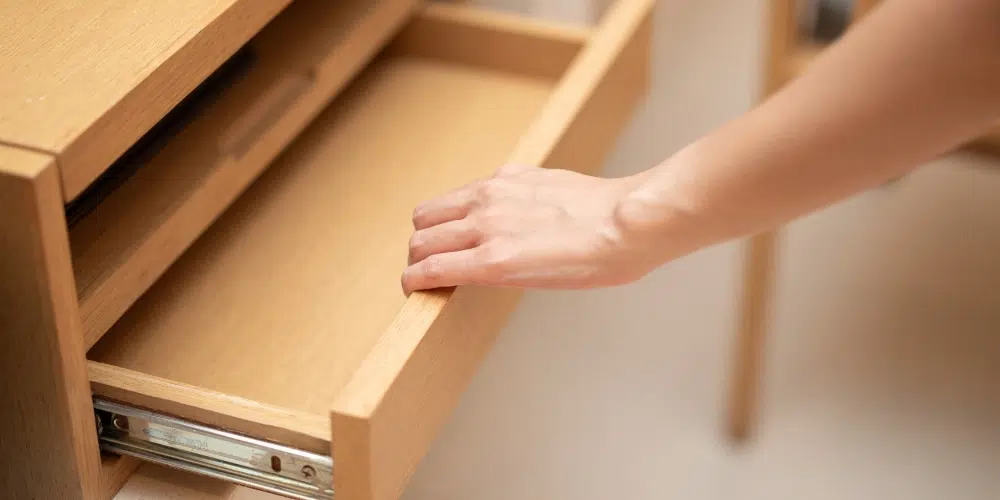
Around the same time, in my business, I noticed loops were being closed and ideas and options that no longer made sense were let go, but I wasn’t trying to get ahead by locking down all my plans for this year.
Why This Matters
January has a habit of pulling leaders towards certainty.
Often not because it’s the best move, but because it’s what’s expected.
But when future conditions are unclear, early certainty can constrain us.
Filling every available space with commitments can limit our ability to respond.
It can also make it harder for teams to adapt when something new emerges.
For leaders accountable for results, this matters because friction is more likely when everything is already locked in, and you then try to adjust.
People start protecting decisions instead of exploring what’s now in front of them.
What Others Are Saying
The IBM Institute for Business Value asked more than 1,000 C-suite executives, and thousands of global consumers and employees, about their outlook for 2026.
They shared the expectation that opportunity will emerge from ongoing uncertainty.
Many executives expect volatility, but they also expect volatility to create opportunity. What matters isn’t optimism or risk aversion, it’s readiness and having the space to respond when something shifts.
Annie Duke, a former professional poker player, has spent years thinking about how people make decisions when they don’t have all the information.
She puts it simply:
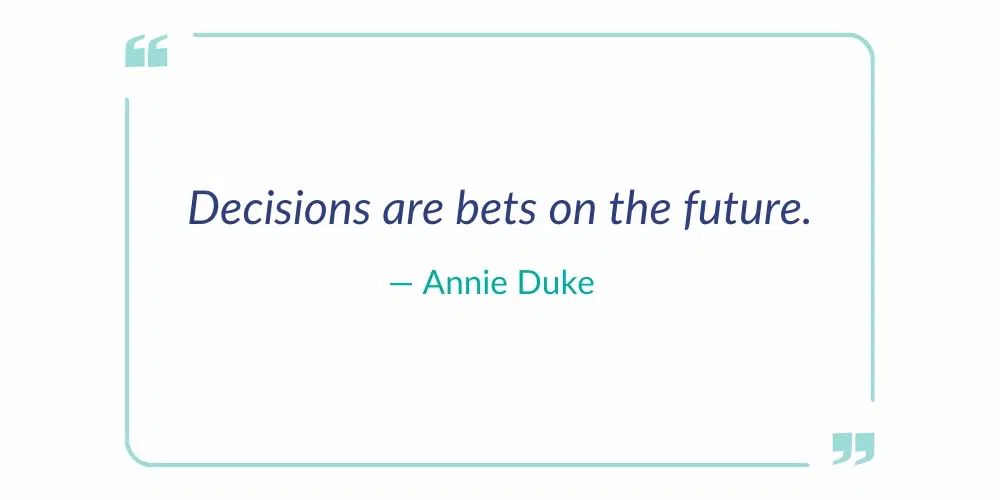
She repeatedly emphasises that every decision is effectively a probabilistic bet on a possible but uncertain future state.
The smart play isn’t to place all your bets as early as possible. It’s to pay attention to what’s emerging and decide when to commit.
A Useful Way To Think About It
It’s like when you pack a suitcase.
Everything can look organised at the start when every available space is filled, and you’ve packed for every eventuality.
Then something emerges that you also want to bring with you and the only way to adapt is to force something else out.

Leaving some space can feel inefficient early on. But it’s often what protects your ability to adapt later.
Questions Worth Sitting With
1. What are you carrying into 2026 that no longer makes sense?
2. What time, budget or attention have you already filled that you might need back?
3. Which decisions could be phased rather than locked in now?
And the more uncomfortable one:
4. What are you doing because it feels expected, rather than because it feels right?
Making space isn’t about doing less. It’s about noticing and connecting things that don’t yet look related, before you’ve committed so much that every new insight turns into another conversation about why you can’t act on it.