

Learning to loosen up with AI
I’ve started having more closed-door conversations at work. Not with clients. Not with team members. With my AI.
When I first started using AI tools, I’d sit there typing, minding my please and thank yous, crafting careful prompts and waiting patiently for the magic to happen.
It was a bit like mentoring a junior team member entirely over email or via a Teams channel.
It was laborious.
There were misunderstandings everywhere, and the nuance was missing.
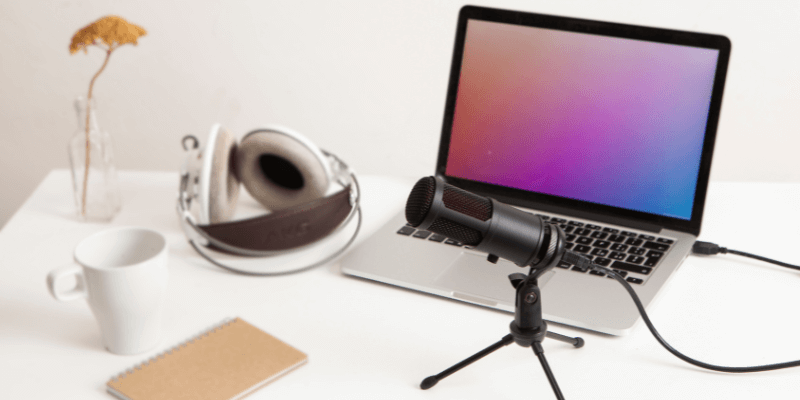
Now the microphone has changed everything.
I’m not always typing; I’m talking a lot more.
But it means I need more privacy, because occasionally I’m swearing.
Everyone in my house knows that if they hear “#%*!@” from downstairs, it’s me frustrated with my tech again.
Mind you, I would never swear at a human staff member. That’s not okay.
But apparently AI doesn’t take offence.
At least, having grown up with the Terminator movies, I hope so.
When AI becomes a thinking partner
In their article “How AI Can Help Managers Think Through Problems” (February 2025), Elisa Farri and Gabriele Rosani explain that generative AI has the potential to become a thinking partner for managers.
It can offer fresh perspectives, evaluate trade-offs and support strategic reflection.
But their research shows that only about 30 percent of managers feel confident using it that way.
I’m curious whether you can relate to that, because I do.
That’s exactly how I’m interacting with the tools.
I’m not treating them as passive assistants that simply do what I tell them.
I’m treating them as sparring partners.
Ones I sometimes have to tell to stop sucking up and to hit me between the eyes with what’s not working.

And this is where it connects to being a centred leader.
One of the five points of the Centring Star is Intellectual Flexibility.
It’s the capacity to explore multiple perspectives, challenge your own assumptions and adapt your thinking as the context shifts.
Used intentionally, AI is a valuable tool if you want to develop your intellectual flexibility and become a more centred leader.
You can train it to help you test ideas, explore how different stakeholders might respond or identify the gaps and questions others are likely to raise.
It can help you pressure-test your reasoning, anticipate concerns and see your blind spots faster.
Of course, it’s not a replacement for genuine engagement or human insight.
It’s only as good as what it’s been trained on.
But it can help you get ready.
It can help you anticipate.
And it can help you handle uncertainty with a little less angst.
Keep your intelligence at the centre
However, working with AI is like mentoring someone bright and keen who can’t quite hold onto the learning.
You explain, they nod, they try again, and then make the same mistake you corrected yesterday.
You call it out, patiently most days, and keep at it because you can see the potential.
But it takes time, energy and patience to stop yourself from shouting, we’ve been over this!
It reminds me of something Fei-Fei Li said.
She’s a Professor of Computer Science at Stanford University and Co-Director of the Stanford Human-Centered AI Institute:
“Artificial intelligence is not a substitute for human intelligence. It is a tool to amplify it.”
— Fei-Fei Li
Used well, AI can sharpen the same leadership muscles you rely on every day.
It can help you:
1. See your own patterns.
Use AI to notice how you think.
Ask it: What might my team, my board or my stakeholders see that I’m missing here?
2. Develop range.
Use it to test multiple perspectives before decisions are made.
Ask it: What’s the opposing view? How might stakeholder X respond differently to stakeholder Y?
But remember to:
3. Value your own intelligence as much as the AI’s.
Let AI stretch your thinking rather than replace it.
Use a sharp eye and continually check whether its answers reflect your reality, the context you know, not the one it assumes.
This blog was written collaboratively with an AI tool.
And yes, it’s still speaking to me.