

On a work trip to Sydney that crossed over with the weekend of the Sydney Marathon everywhere I would normally stay was either full or priced like it knew I had no choice.
The pickings were slim, so I read the reviews and chose what I thought would best meet my needs.
I arrived to discover no iron or ironing board. A bathroom where the only place I could use my toiletry bag was metres from the sink, a layout that meant the light had to be switched on at three in the morning if you had to go, and a floor you could reach from the street without a room key. My husband spent ten minutes on the phone telling me why I needed to wedge a chair under the door.
When asked to provide a review, I did. It was factual, not rude and written from the perspective of a female business traveller so people reading it could decide if my experience was relevant for them.
A few days later an email arrived offering me a hundred dollars back on my credit card. The refund would be processed once my review had been deleted. The email included step by step instructions for deleting it, and offered a complimentary upgrade and a late check-out if I came back.
What was on the table
This wasn’t an offer of compensation for a poor stay. It was payment to remove a useful signal to other female business travellers.
The interesting part is an iron and an ironing board would have cost less than the hundred dollars. They chose to pay more than the fix would have cost to make the report of the problem go away. It backfired on them because I dug my heels in.
The regulator is clear about the buying part
The ACCC’s guidance for business says a business may mislead consumers if they “suppress or edit negative reviews” or “remove genuine reviews that are negative”.
HealthEngine, an online health marketplace, discovered that the hard way after admitting it did not publish a large volume of negative patient reviews and edited others to remove the negative parts. The Federal Court ordered it to pay $2.9 million in penalties, for the reviews and for other conduct.
How this shows up in your organisation
Organisations run on the same kind of signals as reviews. Complaints. Incident reports. Near misses. Client feedback. The staff survey.
When those numbers improve, there are two explanations. Things got better or telling you stopped being worth it.
The effect of trying to bribe me to delete my review was the opposite of the one intended. What I did do was start reading every review on that platform differently, including the good ones.
My review was already incomplete. I’d left out the issue with the chair and the desk. I sat in that room through a board meeting, shoving pillows behind my back, because the chair was not made for working. I had finished the review when I remembered and could not be bothered going back to add it.
So the signal had already been trimmed before anyone offered to buy it.
Most organisations never have to buy anyone’s silence. They get it at no cost, through what happened to the last person who raised something and what everyone else noticed about it.
Ed Catmull, a co-founder of Pixar, wrote in Creativity, Inc.:
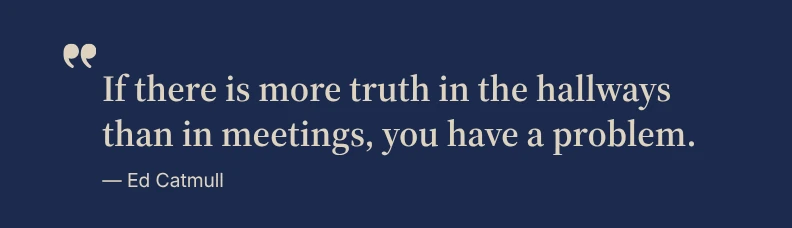
The hallways in your organisation are full of information about how things are going. What decides whether any of it reaches your meeting is not how honest your people are. It is what they saw happen the last time somebody took it to a person who could do something about it.
What to do about it
What has stuck with me is that I could not get from the bed to the bathroom without turning on a light. I couldn’t see the shape of the room well enough to move through it in the dark.
That is close to the position most senior leaders are in. You are moving through a system you cannot fully see, on information that has been through several people before it reached you. What you decide is whether to turn something on.
The hotel had a cheaper option. Buy the iron, then reply to the review in public and say it is now in the room. The iron cost less than the hundred dollars they offered me, and the reply cost nothing. The next person reading it learns what went wrong, and that the hotel fixed it when someone pointed it out. A clean rating loses that signal to others.
Start this week with who sees your answer. When the hotel replied to me, one person read it. Inside your organisation, responses tend to go broader. So the next time something gets raised and you fix it, tell the people who did not raise it. Name the thing and name what changed as evidence for everyone else that the channel goes somewhere.
The other way to test the signals reaching you is to compare them with what leaders outside your organisation are seeing.
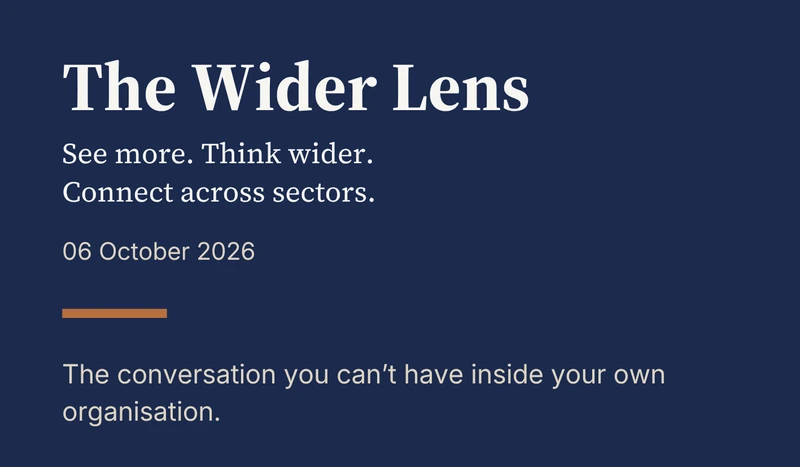
The Wider Lens is a working session for senior leaders across NGO health, community and human services. I set the questions and facilitate the morning, bringing in perspectives from across the sectors, so you leave with a read that has been tested against people running different organisations under the same pressure. Two and a half hours, under the Chatham House Rule. The next session is at Queensland Law Society House in Brisbane on Tuesday 6 October.
If you would like the details, reach out.
Written with AI assistance. The thinking and the final wording are mine.